

Somewhere, in a drawer or on the end of a bed, there is a quilt that someone you love made. You might not know which square came from which dress, but you know it was pieced together by hand, one small scrap at a time, and that it has kept people warm for longer than you have been alive. That is the quiet magic of patchwork. It takes what is left over and turns it into something that is loved more than the original ever was.
Patchwork is one of the oldest crafts in the world, and one of the most human. It has been treasured by queens and stitched by prisoners, by farming families and by artists whose work now hangs in museums. Here is its story, and why, 5,000 years on, it feels more relevant than ever.

Patchwork at a glance
| When | Where | What happened |
|---|---|---|
| c. 3400 BC | Egypt | The oldest known depictions of patchwork, used for clothing, wall hangings and furniture |
| c. 980 BC | Egypt | A patchwork funeral canopy is buried in an Egyptian queen's tomb |
| c. 1360 | Sicily | The Tristan Quilt, one of the earliest surviving decorative quilts |
| 1718 | Britain | An unknown maker stitches the initials "EH" into a silk coverlet of 69 blocks, the oldest dated British patchwork |
| 1603–1912 | Japan | Rural families develop boro, mending and layering scraps of indigo cloth for generations |
| 1841 | At sea | 180 women on a convict ship sew the Rajah Quilt on their way to Tasmania |
| Late 1800s | Britain & America | The Victorian "crazy quilt" craze |
| 1930s–1950s | America | The Great Depression revives patchwork; flour and feed sacks become quilts |
| 20th century | Gee's Bend, Alabama | Quilters turn old work clothes into bold, improvised designs now held in over 40 museums |
| Today | Everywhere | Patchwork moves from the bed to the sofa, the wall and the dining chair |
Born from necessity
Patchwork began for the simplest reason: fabric was precious. Before looms were powered by steam, every metre of cloth represented days of spinning and weaving, so nothing was wasted. Worn garments were cut down, and the good parts were joined into something new.
The earliest depictions of patchwork come from ancient Egypt, around 5,500 years ago, where it was used for clothes, wall hangings and furnishings. An Egyptian queen was even buried beneath a patchwork funeral canopy around 980 BC. In medieval Europe, layers of quilted fabric were sewn into padding worn under armour, and by the 11th to 13th centuries quilts were appearing in homes.
One of the most beautiful survivors from this era is the Tristan Quilt, made in Sicily around 1360. Its scenes from the legend of Tristan are still visible more than six centuries later.
A British story, stitched by women
For most of its history, patchwork was women's work, done in the evenings, by candlelight, between everything else. The makers rarely signed their names, so we know them only through what they left behind.
The oldest dated patchwork in Britain is a silk coverlet from 1718, now cared for by the Quilters' Guild. It is made of 69 blocks, and somewhere among them its maker stitched just two initials: EH. We do not know who she was. But three centuries later, quilters still copy her blocks.
The Rajah Quilt
Perhaps the most moving patchwork of all was made at sea. In April 1841, the convict ship Rajah left Woolwich bound for Van Diemen's Land, now Tasmania, carrying 180 women prisoners. Before they sailed, Elizabeth Fry's British Ladies Society for the Reformation of Female Prisoners supplied sewing materials for the voyage: fabric, coloured threads, 100 needles, pins, scissors, a thimble and two pounds of patchwork pieces.
Over the 15-week voyage, under the guidance of a free passenger named Kezia Hayter, the women pieced together a coverlet of 2,815 pieces. Around the border they embroidered a message of thanks to the ladies who had shown them kindness. The Rajah Quilt now hangs in the National Gallery of Australia. It is a reminder that patchwork has always been about more than fabric. It is hope, stitched by hand.

Make do and mend, all over the world
Wherever cloth was scarce, patchwork appeared, and each culture gave it its own voice.
- Japan's boro. From the Edo period (1603–1868) into the Meiji era, rural families in Japan patched and re-patched their indigo clothing and bedding, layer upon layer, often reinforcing it with sashiko running stitches. Boro pieces were handed down through generations. The idea behind them has a name, mottainai: a sense of regret at waste.
- Feed-sack quilts. During the Great Depression, American farming families turned flour and feed sacks into dresses, aprons and quilts. Manufacturers noticed, and began printing the sacks in pretty patterns so they could be reused.
- The quilts of Gee's Bend. In a small, isolated community in rural Alabama, generations of women made quilts from old work clothes and fertiliser sacks. Their improvised, joyful designs, which they call "my way" quilts, are now recognised as a major contribution to American art and are held in the collections of more than 40 museums.
- The Victorian crazy quilt. In the late 1800s, fashionable households turned scraps of silk and velvet into irregular, richly embroidered "crazy" patchwork, proof that thrift and luxury can live on the same cushion.
From the quilt to the chair
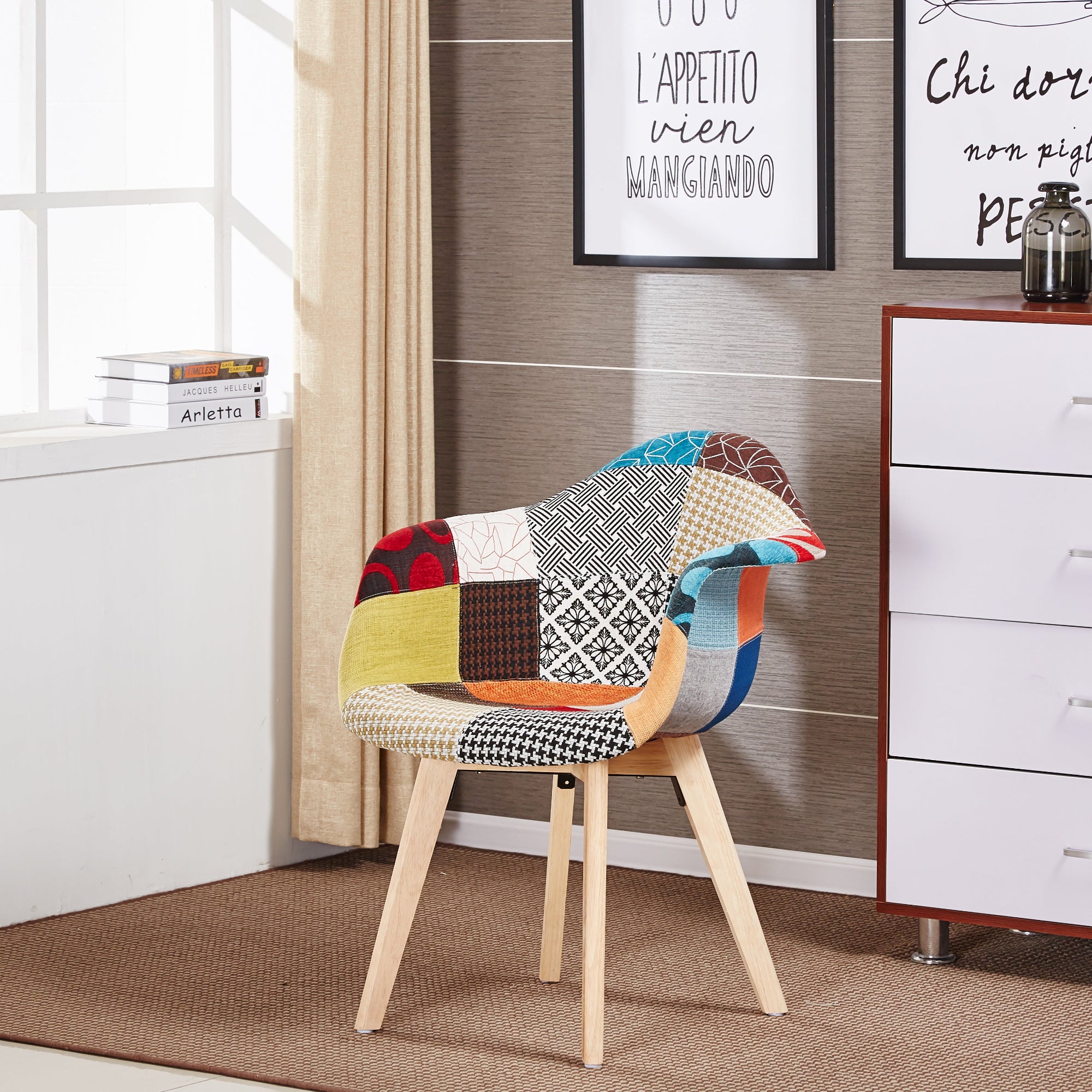
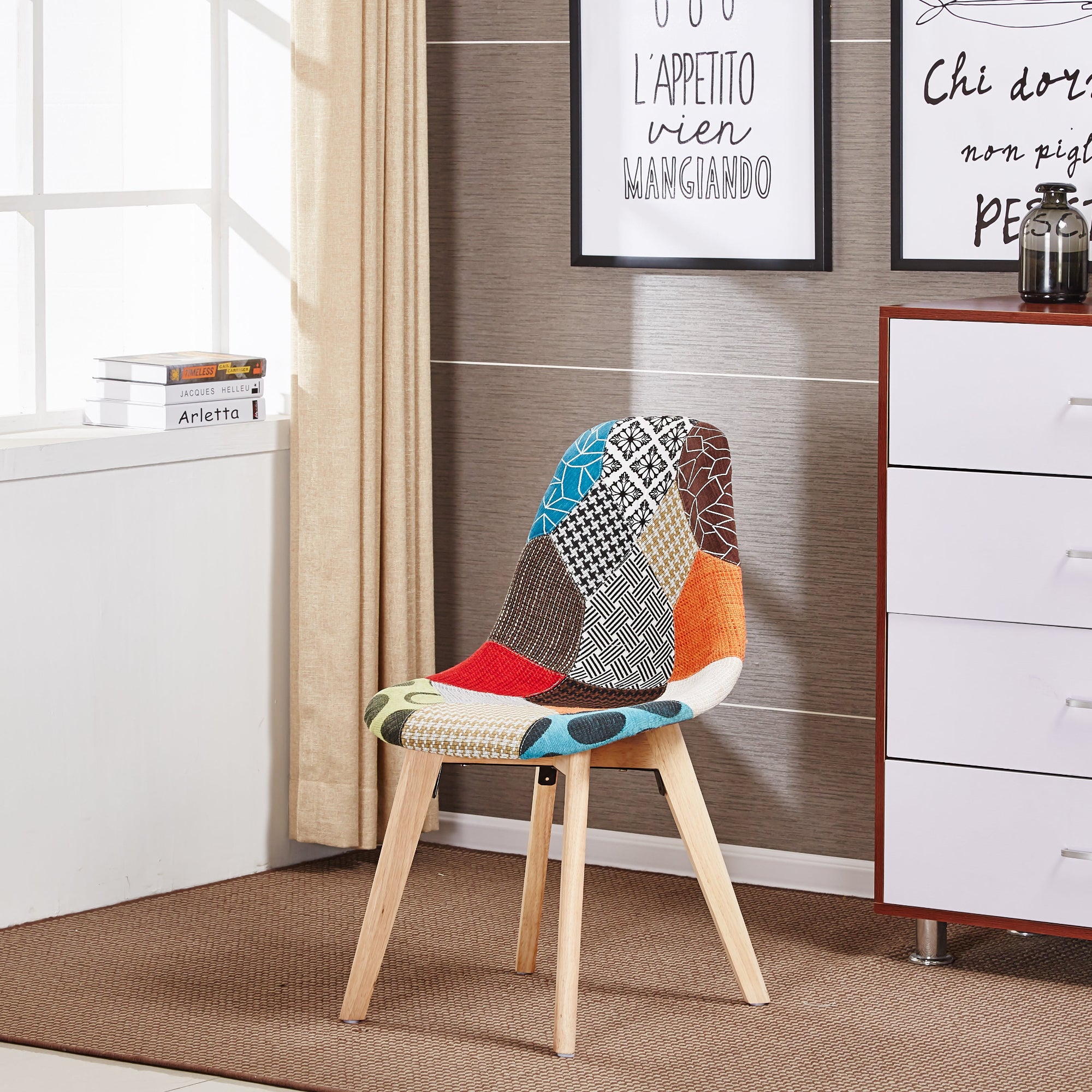
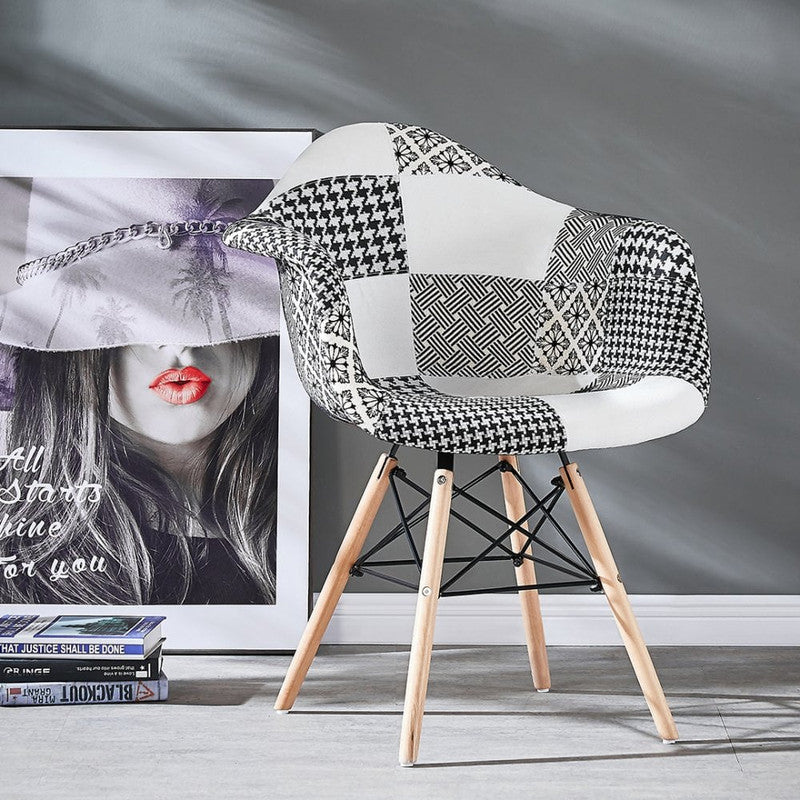
For centuries, patchwork lived on beds. In the 20th century it began to wander around the house: onto cushions, throws, wall hangings, and eventually furniture. Put a patchwork fabric on a clean, mid-century-style chair and something lovely happens. The shape feels modern, while the fabric feels like home.
That mix is why patchwork chairs speak to so many different people. For some, they bring back the quilt on a grandmother's bed or a mother's sewing box. For others, they are a bold, happy design statement that feels nothing like the beige furniture everyone else has. Both are right.

Why patchwork matters again
Patchwork was sustainable long before anyone used the word. Today, we need that thinking more than ever. According to the waste charity WRAP, 49% of used textiles in the UK end up in general waste, around 711,000 tonnes a year, or roughly 35 items for every person. Most of it is burned or sent to landfill.
The patchwork mindset offers a gentler way: keep things longer, mend what you can, and choose pieces you will still love in ten years. You don't need to be able to sew to live it.
Five ways to bring the patchwork spirit home
- Keep a scrap bag. Hold on to the good parts of worn-out shirts, dresses and curtains. Even a few squares can become a cushion cover or a set of napkins.
- Mend visibly. Try a sashiko-style running stitch or a bright patch on a favourite pair of jeans. A visible mend says "this was worth saving".
- Make a memory piece. A cushion or small quilt made from a loved one's shirts is one of the most treasured gifts you can give.
- Donate, don't bin. Textiles that you can't reuse should go to a charity shop or a textile recycling bank, never the general waste.
- Buy to keep. When you do buy something new, choose a piece with character that you won't tire of. Patchwork is timeless because it was never in fashion in the first place.
Bringing patchwork to your table
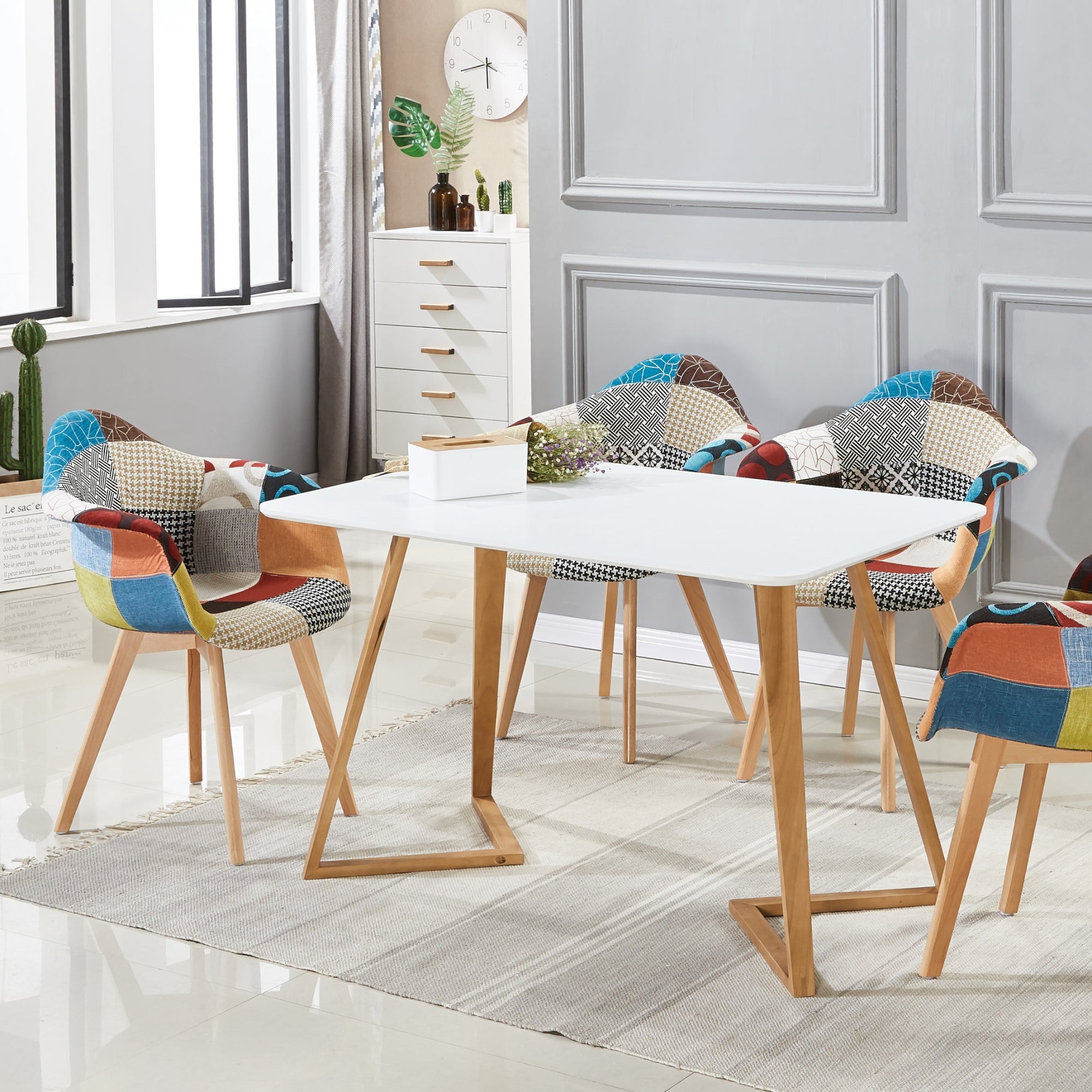
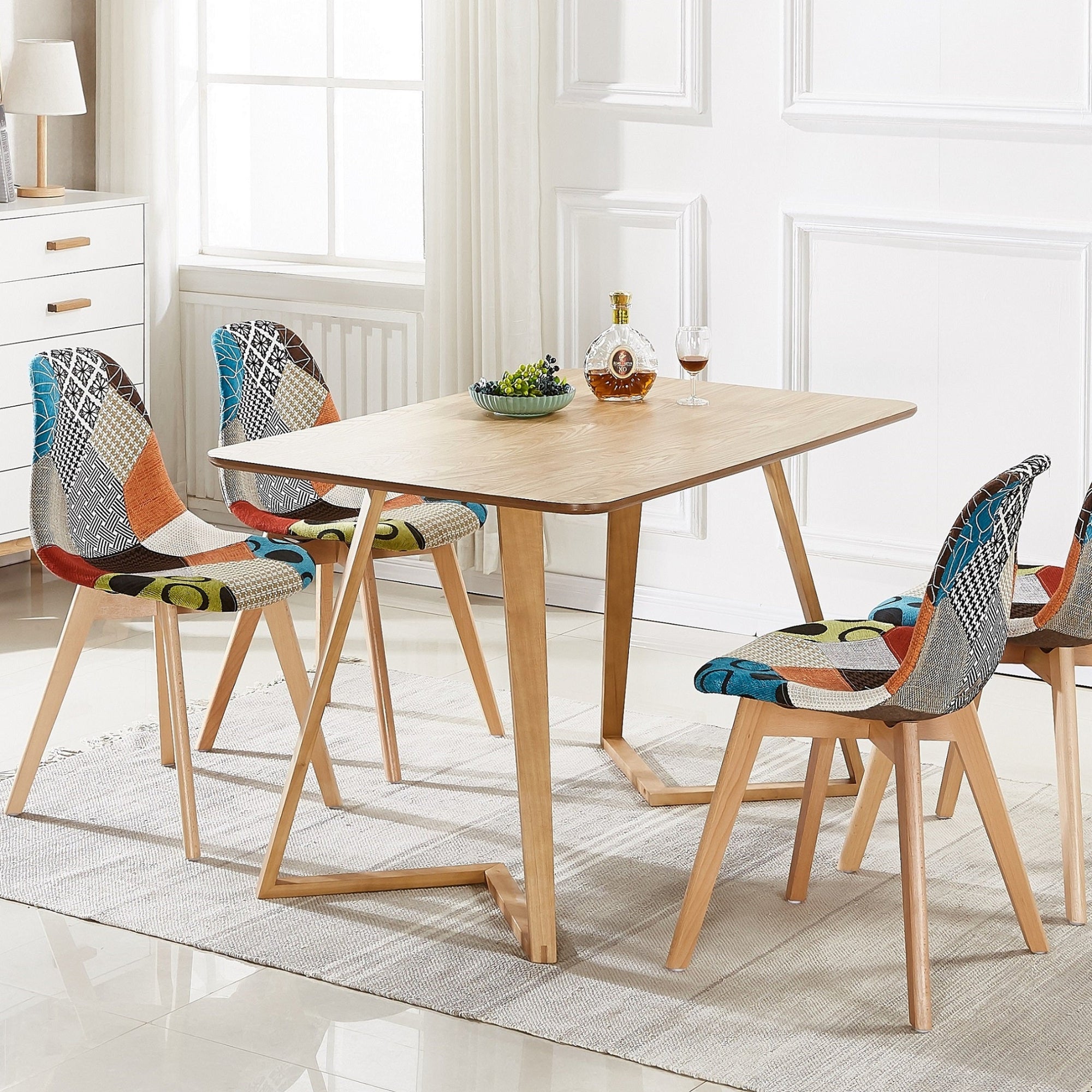
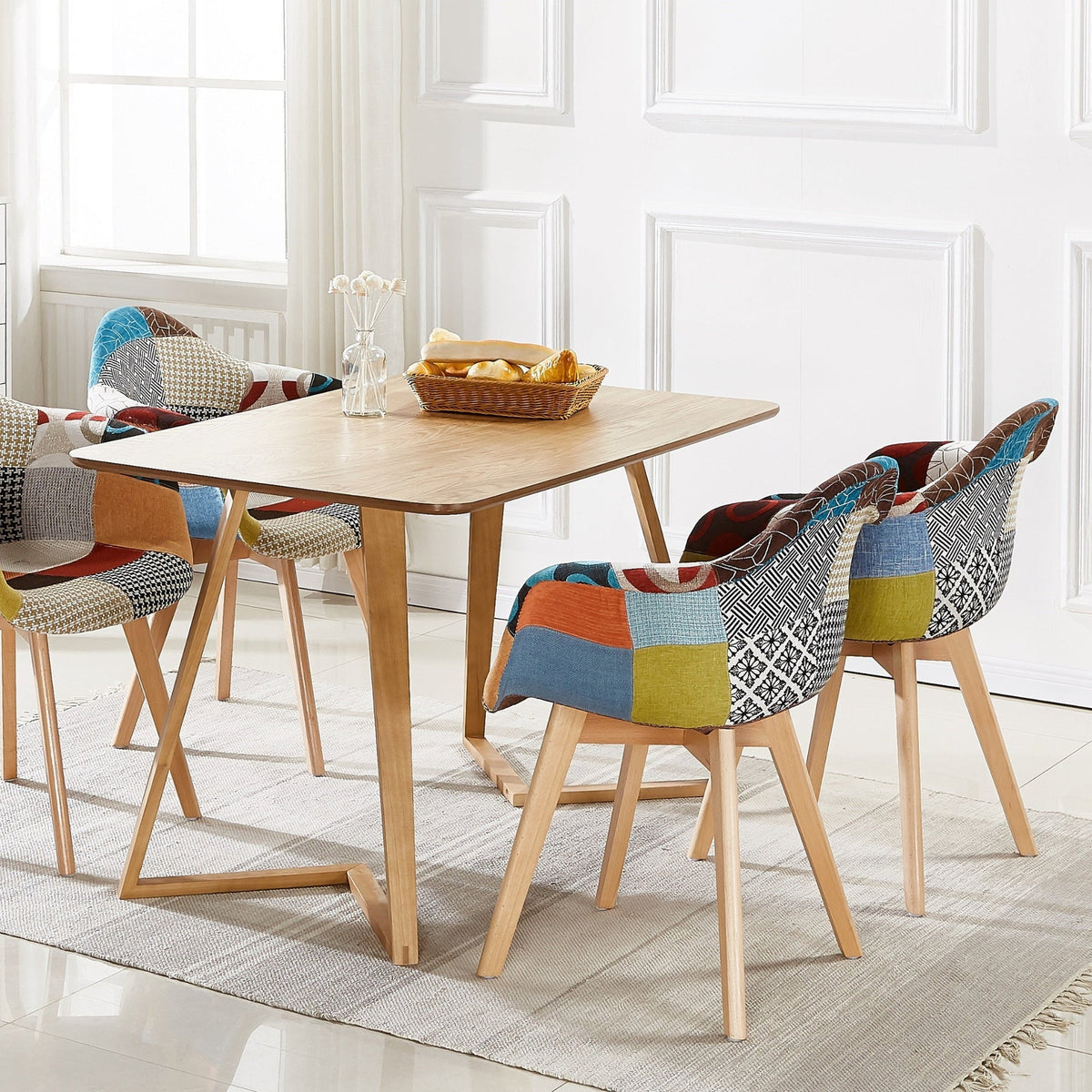
Our patchwork chairs are among the most-loved pieces we sell. Our multicolour patchwork tub chair is rated 4.7 out of 5 across 193 reviews. As one customer put it: "So pleased with these chairs, lovely colours, value for money."
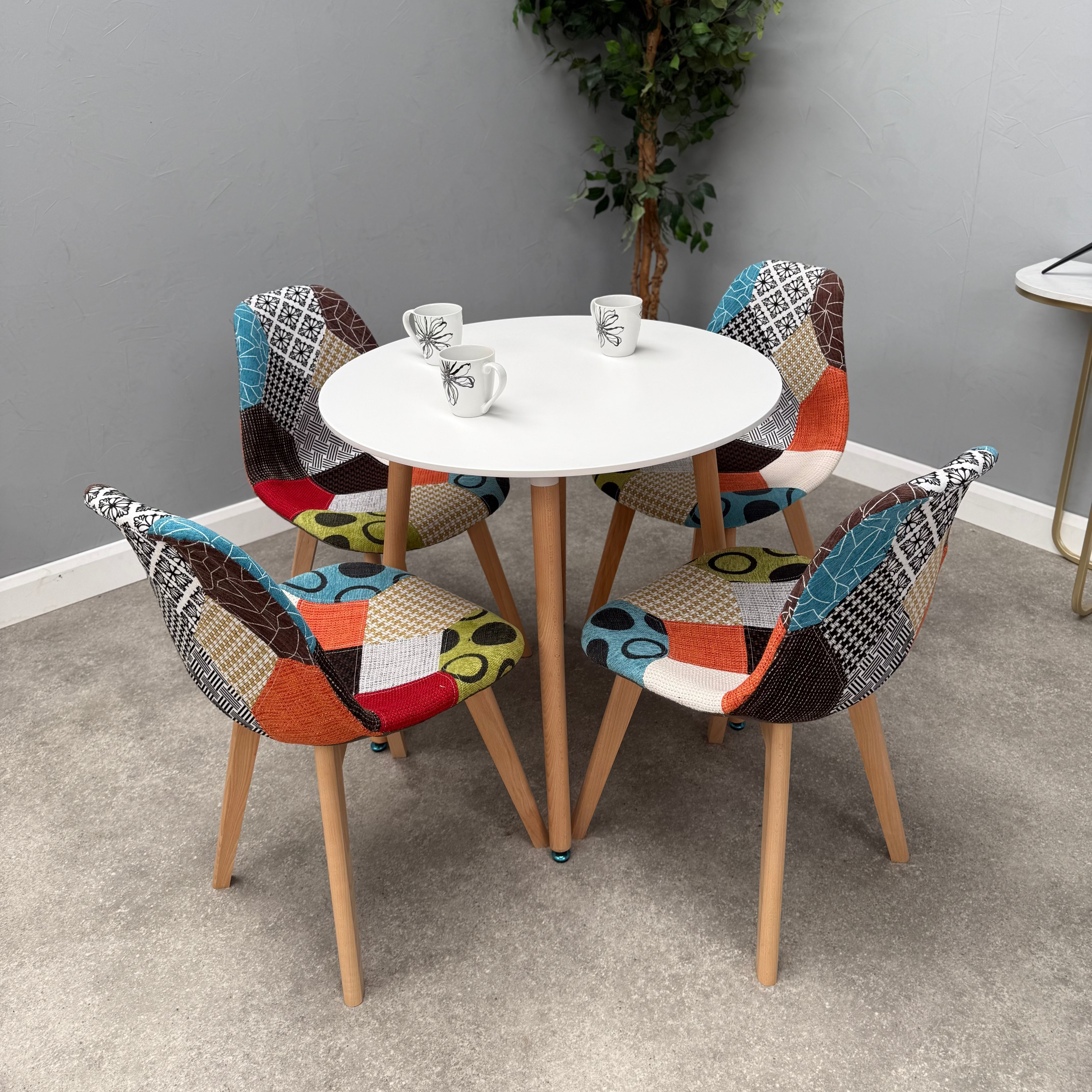
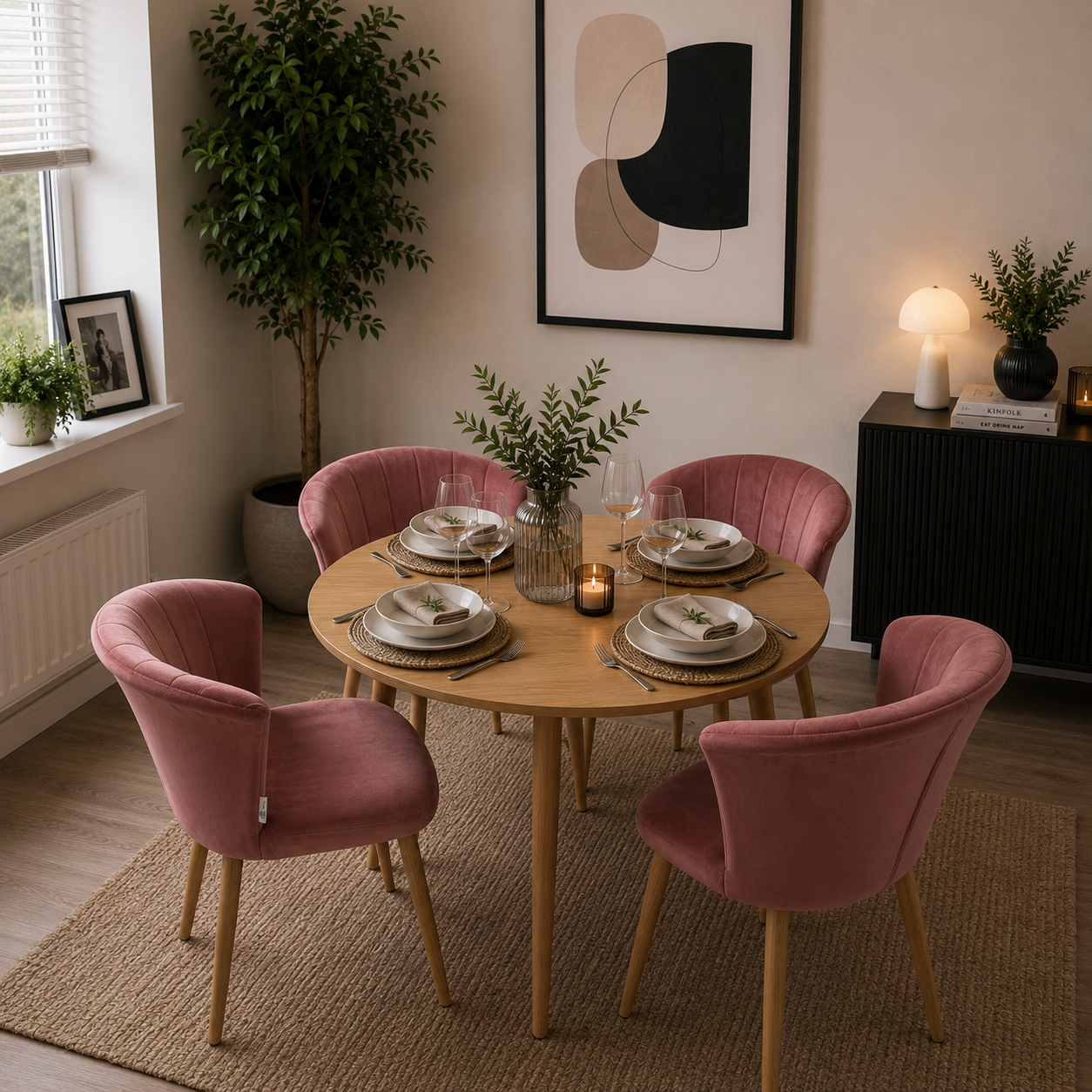
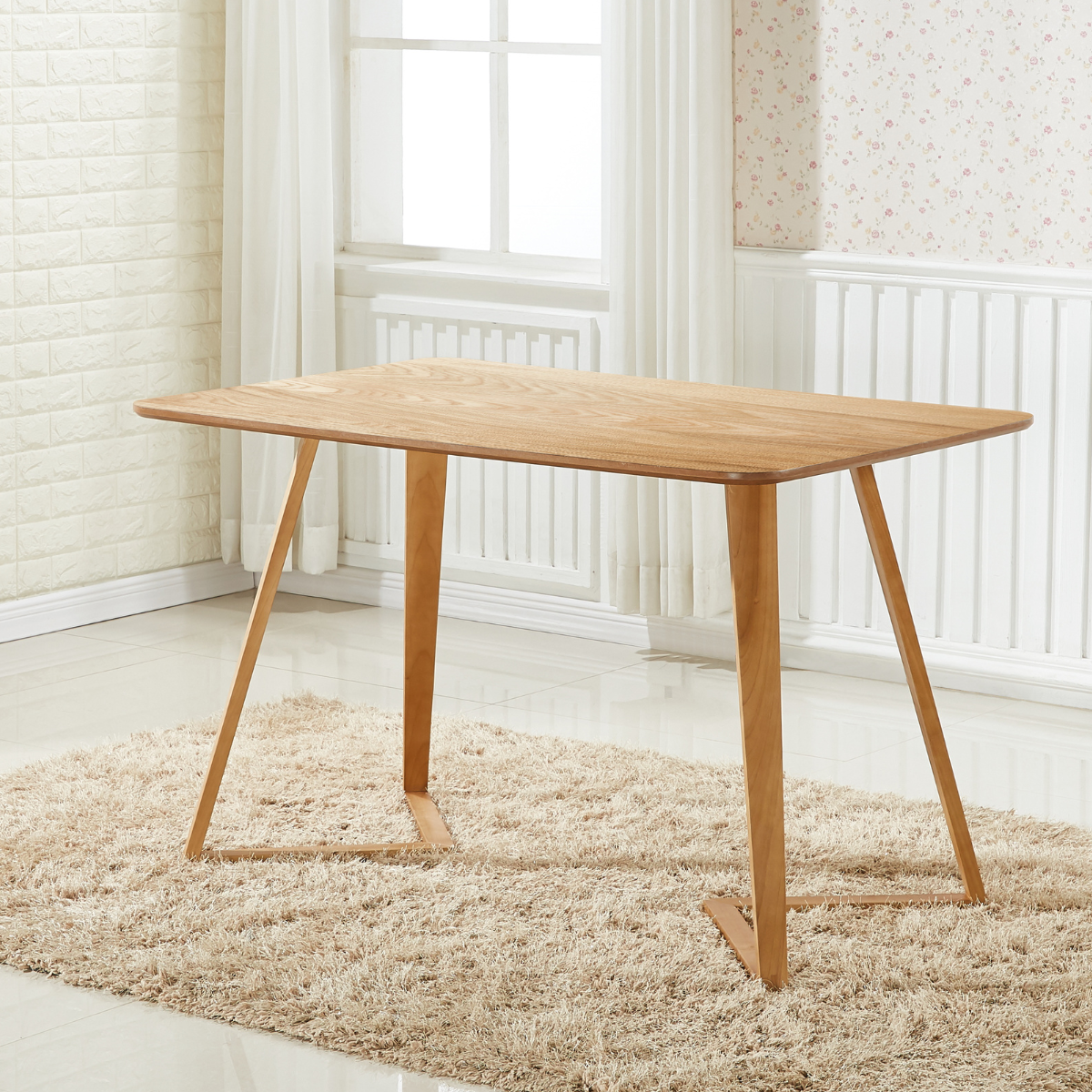
- For a cosy, traditional kitchen: pair multicolour patchwork chairs (£49) with a warm oak table, and let the chairs be the only pattern in the room.
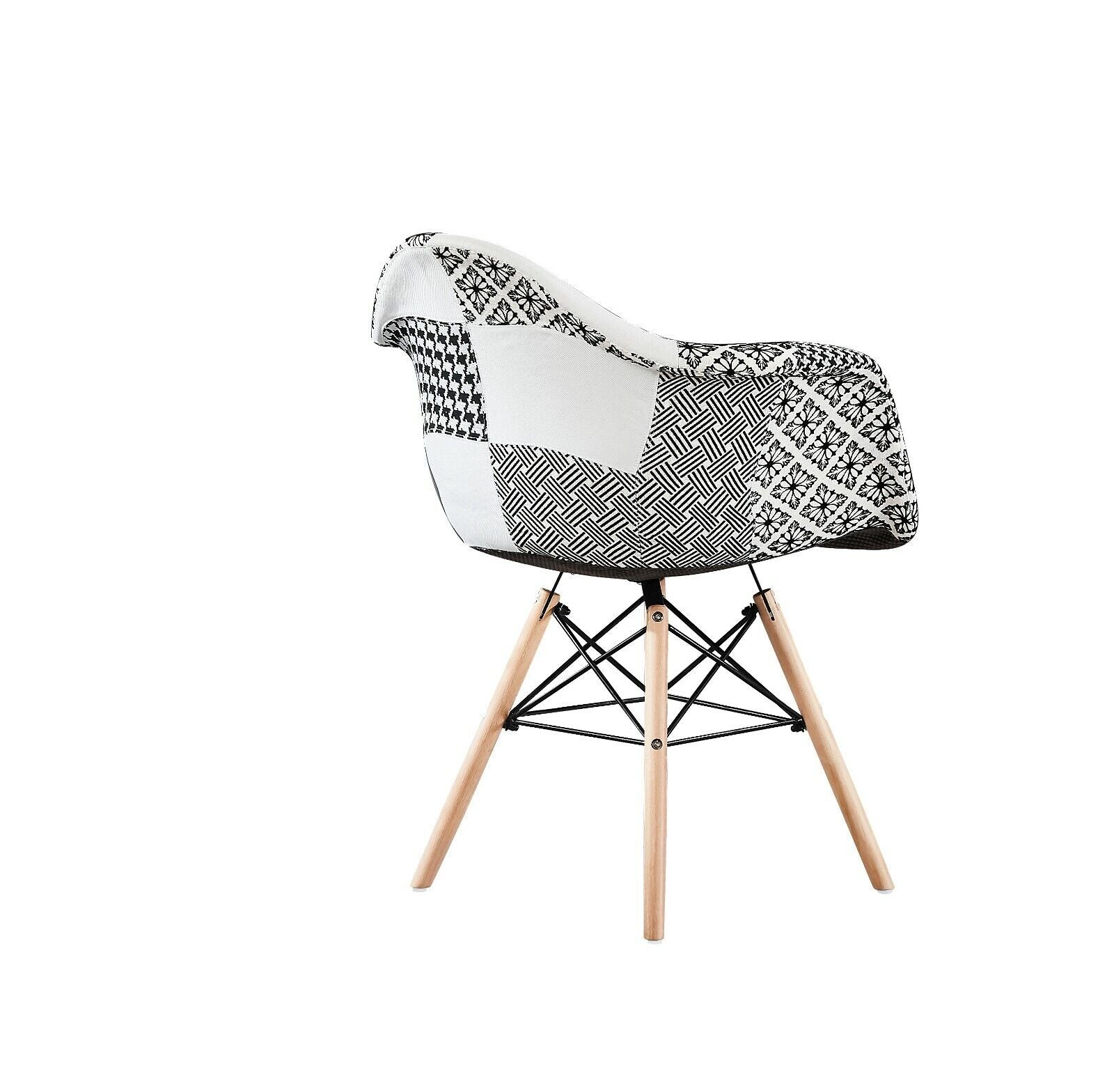
- For a calm, modern space: go monochrome with our black and white patchwork chair (£49) or the new black and white armchair (£59).
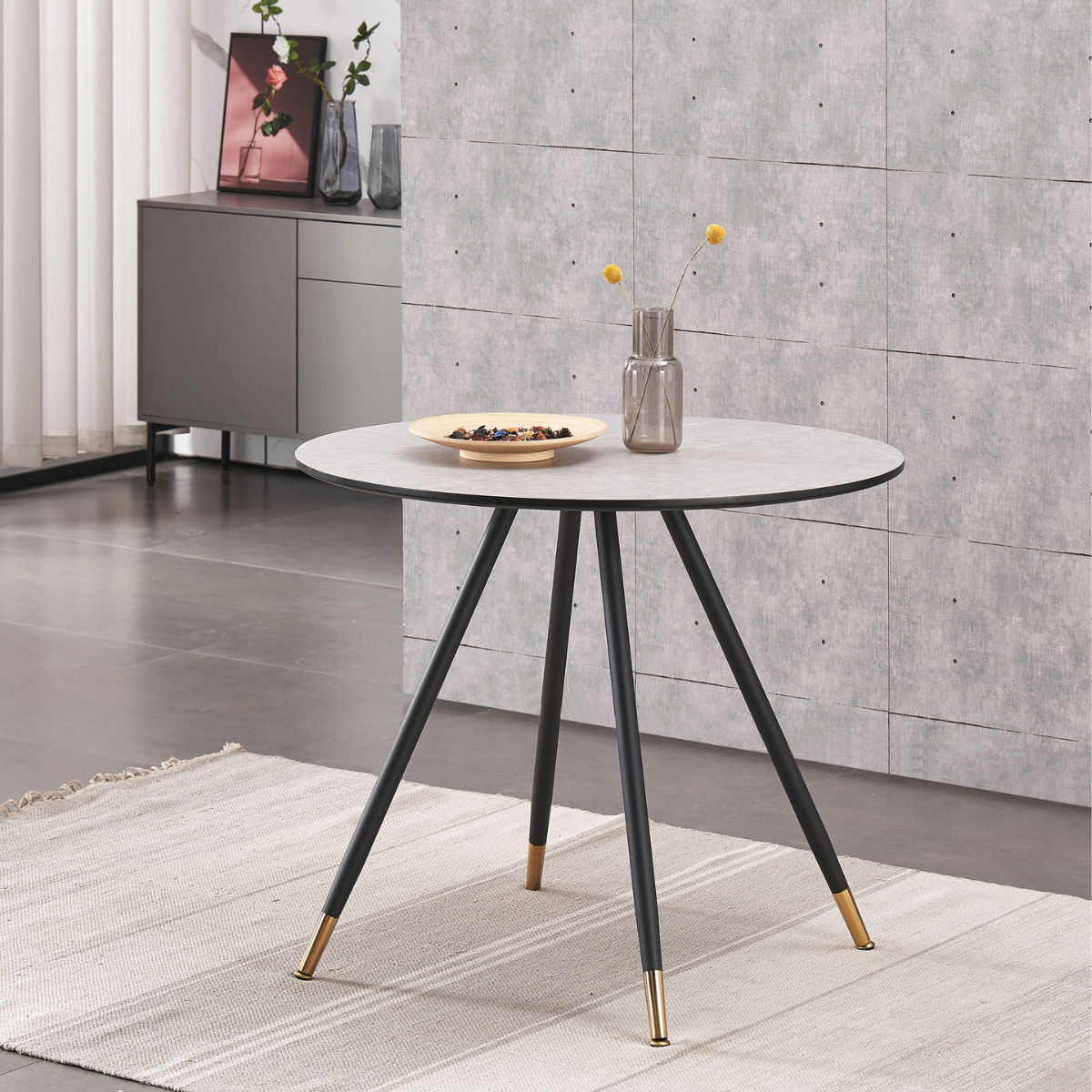
- For a small flat: a round Halo table with two patchwork chairs (£159) fits a kitchen corner and seats two.
- For a reading corner: one tub chair with armrests (£59), a lamp and a throw. That's it.
- Mixing styles: patchwork loves company. Put one at the head of the table with plain chairs around it, or mix multicolour and black and white. Keep one thing in common, such as the wooden legs, and it will look intentional.
See the whole range in our Patchwork Collection.
Frequently asked questions
Where did patchwork originate?
The oldest depictions of patchwork come from ancient Egypt, about 5,500 years ago. The craft developed independently in many cultures wherever fabric was valuable, including Britain, Japan, India and America.
What is the difference between patchwork and quilting?
Patchwork is sewing small pieces of fabric together to make a larger design. Quilting is stitching layers of fabric and padding together. Many quilts use both: a patchwork top that is then quilted.
What is the oldest dated patchwork in Britain?
A silk coverlet dated 1718 and marked with the initials "EH", now held by the Quilters' Guild. It contains 69 patchwork blocks.
Is patchwork sustainable?
Traditionally, yes. It was invented to reuse scraps and make textiles last longer. Today, the most sustainable approach is to reuse and mend what you already have, and to choose new pieces you will keep for many years.
How do I clean a patchwork fabric chair?
Vacuum it regularly with a soft brush attachment and spot clean marks with a damp cloth. Keep it out of strong direct sunlight to help the colours last.
Every patchwork piece is a small act of optimism: the belief that something worn can become something wonderful. Whether it's a quilt from your grandmother or a chair at your own table, we hope yours gets many more stories stitched into it.