



Fabric Dining Chairs: The Complete Guide to Comfortable, Stylish Seating for Every Home
Choosing new seating for your dining room is more exciting than it sounds, and also a little overwhelming. Fabric dining chairs have become one of the most popular choices for UK homes because they combine everyday comfort with a soft, welcoming look that hard wood or leather chairs simply can't match. Whether you're furnishing a first home, updating a tired dining set, or planning a full interior refresh, this guide walks you through everything worth knowing before you buy.
We'll cover styles, fabric types, set sizes, care tips, and how to match chairs to your table and room. By the end, you'll know exactly what to look for and why fabric seating tends to be such a well-loved choice for family dinners, dinner parties, and quiet weeknight meals alike.

Think about the last time you sat at a dining table for more than twenty minutes. Chances are, comfort mattered just as much as looks, especially once conversation ran long or a meal turned into dessert and coffee. That's really the whole appeal of fabric seating: it looks intentional while still feeling genuinely nice to sit in.
This guide is written for anyone at any stage of the decision, whether you already know you want fabric chairs and just need to pick a set size, or you're still weighing fabric against leather, wood, or a mixed dining set. We'll keep things practical throughout, with real numbers, honest comparisons, and a few things worth checking before you add anything to your basket.
It's also worth saying upfront that there's no universally "correct" chair. The right choice depends on your table, your room, your household, and how you actually use the space, not just what looks good in a showroom photo. Keeping that in mind as you read through each section will make the final decision much easier.
What Are Fabric Dining Chairs?
Fabric dining chairs are dining seats with a cloth-based covering, usually stretched over a padded seat and sometimes a padded back too. Unlike hard wooden or plastic chairs, the fabric layer adds cushioning that softens the feel of sitting for longer stretches.
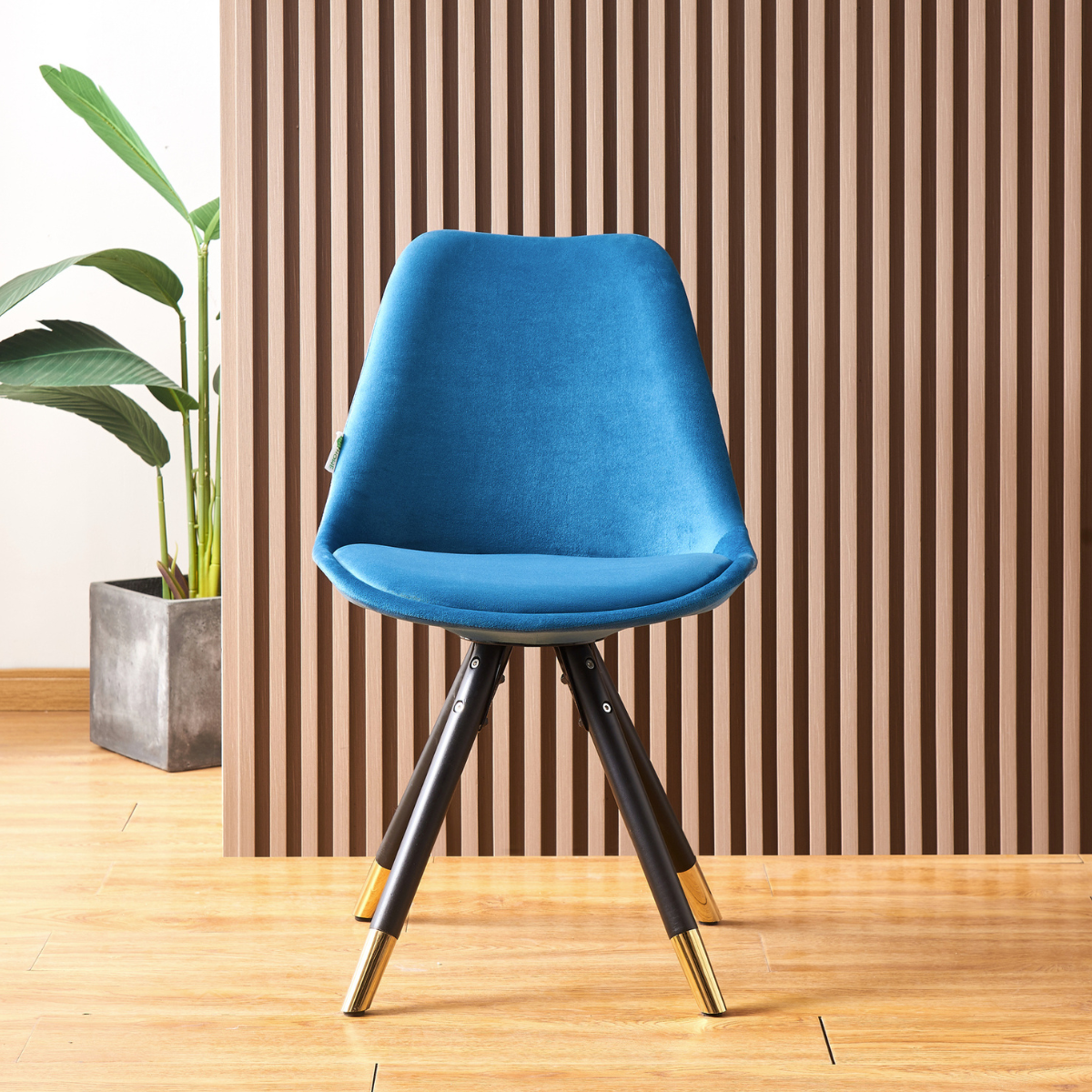
The fabric itself can range from cotton-linen blends to velvet, boucle, chenille, or performance weaves designed to resist spills. Most fabric dining chairs sit on a solid wood, metal, or engineered wood frame, giving them structural strength while the fabric does the work of comfort and style.
They're a favourite in modern UK homes because they soften a room instantly. A dining table surrounded by fabric chairs feels less formal and more like a space people actually want to linger in.

Structurally, a fabric dining chair usually has three parts working together: the frame, the padding, and the outer fabric. The frame provides stability and determines weight capacity, the padding (often high-density foam) determines comfort, and the fabric determines both feel and appearance. A weak point in any one of these three areas affects the overall quality of the chair, which is why it's worth looking beyond just the fabric colour when comparing options.
Fabric chairs also tend to age differently to hard chairs. Rather than showing scratches or dents, wear on a fabric chair usually shows up as fading, flattening padding, or a loosened cover. Knowing this in advance helps you choose a fabric and construction that suits how often the chairs will actually be used, rather than just how they look on day one.
Fabric Dining Chairs vs Upholstered Dining Chairs: What's the Difference?
This is one of the most common points of confusion, and the honest answer is that the two terms overlap more than they differ.
"Upholstered" simply describes any chair with padding and a covering material, which could be fabric, faux leather, or genuine leather. "Fabric" specifically refers to the covering material itself. So every fabric dining chair is technically upholstered, but not every upholstered chair uses fabric.
| Feature | Fabric Dining Chairs | Leather/Faux Leather Dining Chairs |
|---|---|---|
| Feel | Soft, warm to the touch | Cool, smooth, slightly firmer |
| Breathability | Better for long meals in warm rooms | Can feel warm in summer |
| Maintenance | Needs occasional cleaning, some fabrics stain-resistant | Wipes clean easily |
| Style range | Huge variety of colours and textures | Typically neutral tones |
| Family-friendly | Good with stain-treated or performance fabric | Very practical for spills |
For most households, the deciding factor comes down to how the room feels day to day. Fabric tends to win on comfort and personality, while leather wins on quick wipe-down convenience.

There's also a middle ground worth mentioning: faux leather with a fabric-like texture, and performance fabrics engineered to resist moisture almost as well as leather. These hybrid options have grown in popularity because they let households avoid choosing strictly between the two, offering some of the softness of fabric with more of the practicality typically associated with leather.
If you're still undecided, consider how the dining space is used day to day. A dining room used mainly for formal dinners and special occasions can lean toward softer, less stain-resistant fabrics purely for the feel. A kitchen-diner used for breakfast, homework, and casual family meals benefits far more from a durable, treated fabric that can handle daily wear without looking tired within a year.
Fabric Dining Chairs in the UK: Finding the Right Style for Your Home
British homes come in all shapes, from compact terraced house dining nooks to open-plan kitchen-diners in new-build developments. Fabric dining chairs adapt well to both because they're available in so many silhouettes, from slim scandi-style frames to deep, wingback-inspired designs.
In the UK market specifically, neutral tones like oatmeal, grey, and soft green have remained consistently popular because they suit both period properties and modern extensions. Many shoppers also look for chairs that pair well with oak or walnut tables, which are common choices in British dining rooms.

If you're furnishing a smaller space, look for chairs with slimmer legs and lower backs, as these tend to keep sightlines open and make a compact room feel less crowded.
Regional taste also plays a role. Coastal and countryside homes in the UK often lean toward lighter, natural tones like linen, sand, and soft blue-grey, echoing the surrounding landscape. City flats and new-build apartments, on the other hand, tend to favour bolder or darker fabric tones paired with matte black or brass legs for a more architectural look.
It's also worth factoring in natural light. Rooms with limited daylight, common in many terraced houses, generally look better with lighter fabric tones that reflect available light rather than deep, dark shades that can make a small room feel more enclosed.
Fabric Dining Chairs Set of 2
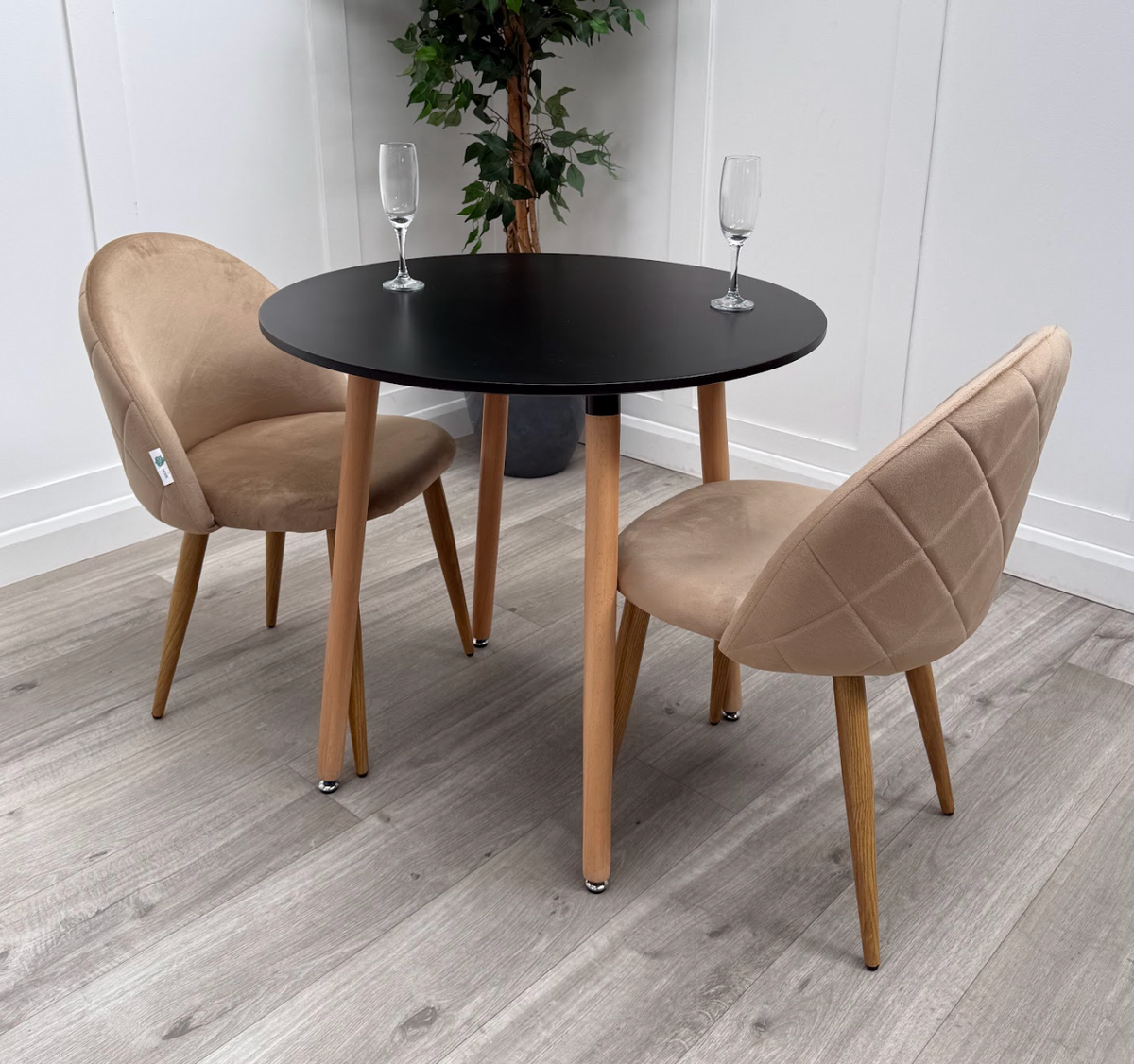
A set of 2 is a practical starting point for smaller households, breakfast nooks, or as accent chairs at the ends of a larger table mixed with a bench. Two chairs are also popular for compact flats where a full dining set isn't realistic.
Buying a smaller set gives you the freedom to mix and match later, adding a bench or a couple more chairs in a complementary shade as your space or needs change.
Fabric Dining Chairs Set of 4
The set of 4 is by far the most common configuration, matching the average four-seater dining table found in most British homes. It's a balanced option that suits couples, small families, and anyone who entertains occasionally without needing a huge table.
Four matching fabric chairs also give a room a coordinated, finished look without the higher cost of a larger set.
Fabric Dining Chairs Set of 6
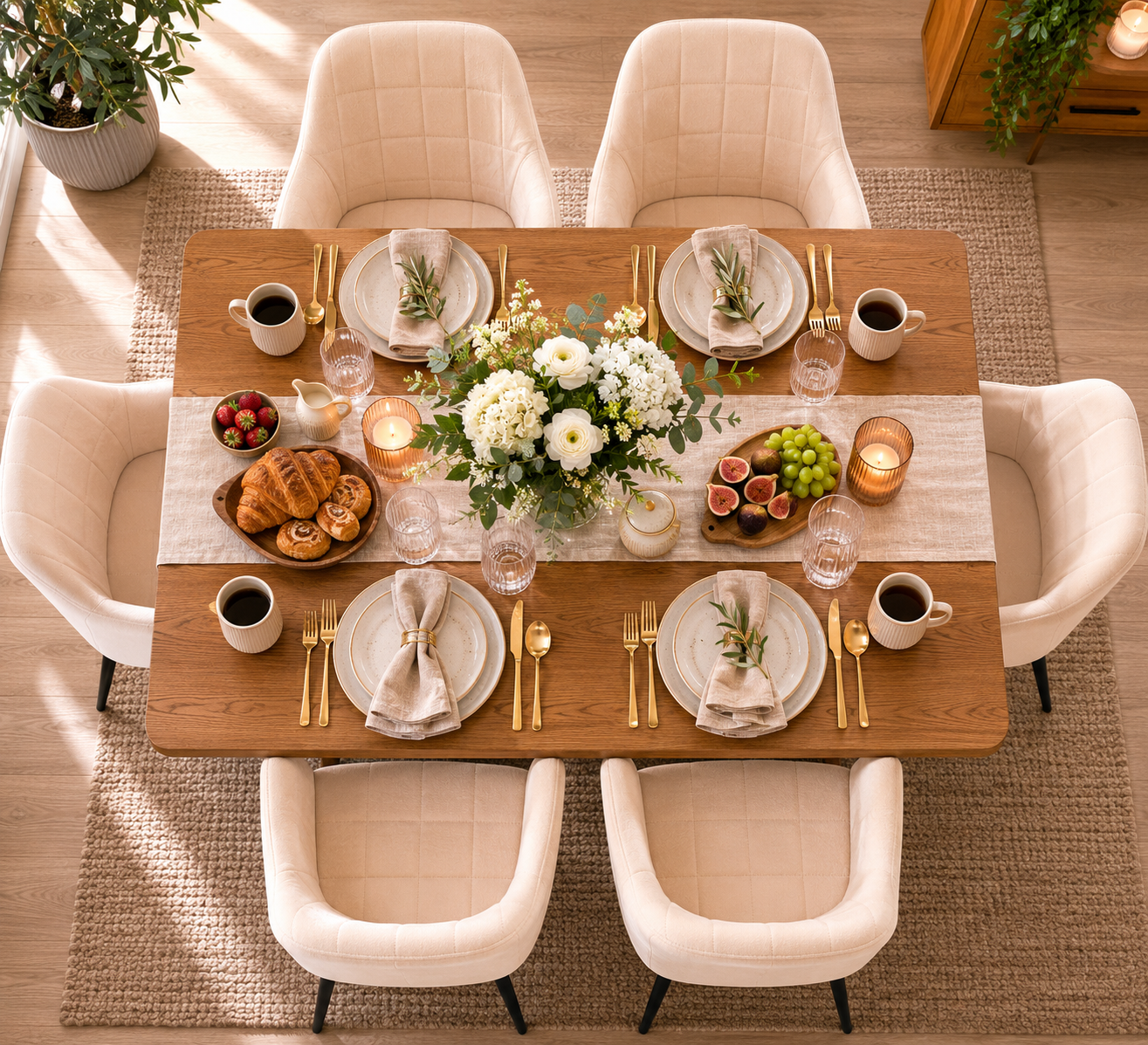
For families or households that host regularly, six chairs strike a good balance between generous seating and manageable space. This set size usually pairs with extendable tables, which is handy if you sometimes need more room for guests and sometimes don't.
Six fabric chairs around a table also make a strong visual statement, especially when the fabric colour complements the flooring and walls.
How to Choose the Best Fabric Dining Chairs
There's no single "best" chair, but there is a best chair for your household. A few practical questions help narrow things down fast:
- Who's sitting in them? Growing families may prioritise stain-resistant fabric, while couples might prioritise softness and style.
- How often will they be used? Daily use calls for a hard-wearing fabric with a higher rub count (more on this shortly).
- What's the table height? Chair seat height should generally sit around 25–26cm below the tabletop for comfortable knee clearance.
- Do you need arms or not? Armless chairs tuck in neatly and save space; armchairs add comfort at the head of the table.
Working through these questions before browsing styles saves a lot of second-guessing later.
It's also worth thinking about how the chairs will be moved. Dining chairs get pulled out, pushed in, and sometimes shifted around a room far more than most other furniture. A lighter frame is easier to reposition for cleaning or rearranging, while a heavier frame tends to feel more stable but can be trickier for smaller family members to manage on their own.
Finally, consider how the chairs will look empty as well as occupied. A dining room is often viewed from the kitchen or hallway more than it's actually sat in, so the silhouette of the chair against the table and floor matters just as much as how it feels once someone sits down.

Comfortable Fabric Dining Chairs for Everyday Dining
Comfort matters more than people expect, especially if meals regularly stretch into long conversations. A well-padded seat with supportive foam density holds its shape over years of daily use, rather than flattening within months.
Look for a seat depth of around 40–45cm, which suits most adult body types without feeling either cramped or overly deep. A slightly curved or angled backrest also makes a noticeable difference for posture during longer meals.
Padding thickness matters more than most people expect. A seat pad under roughly 4cm thick tends to compress quickly and can start to feel firm within the first year of regular use. Anything in the 6–8cm range generally holds its shape far longer while still feeling supportive rather than overly soft.
It's also worth paying attention to how the fabric is fitted over the padding. A tightly stretched, well-tailored cover keeps its shape over time, while a loosely fitted cover can bunch or sag with repeated use. This is a small detail that's easy to miss in photos but makes a real difference once the chairs are in daily use.
Fabric Dining Chairs With Arms
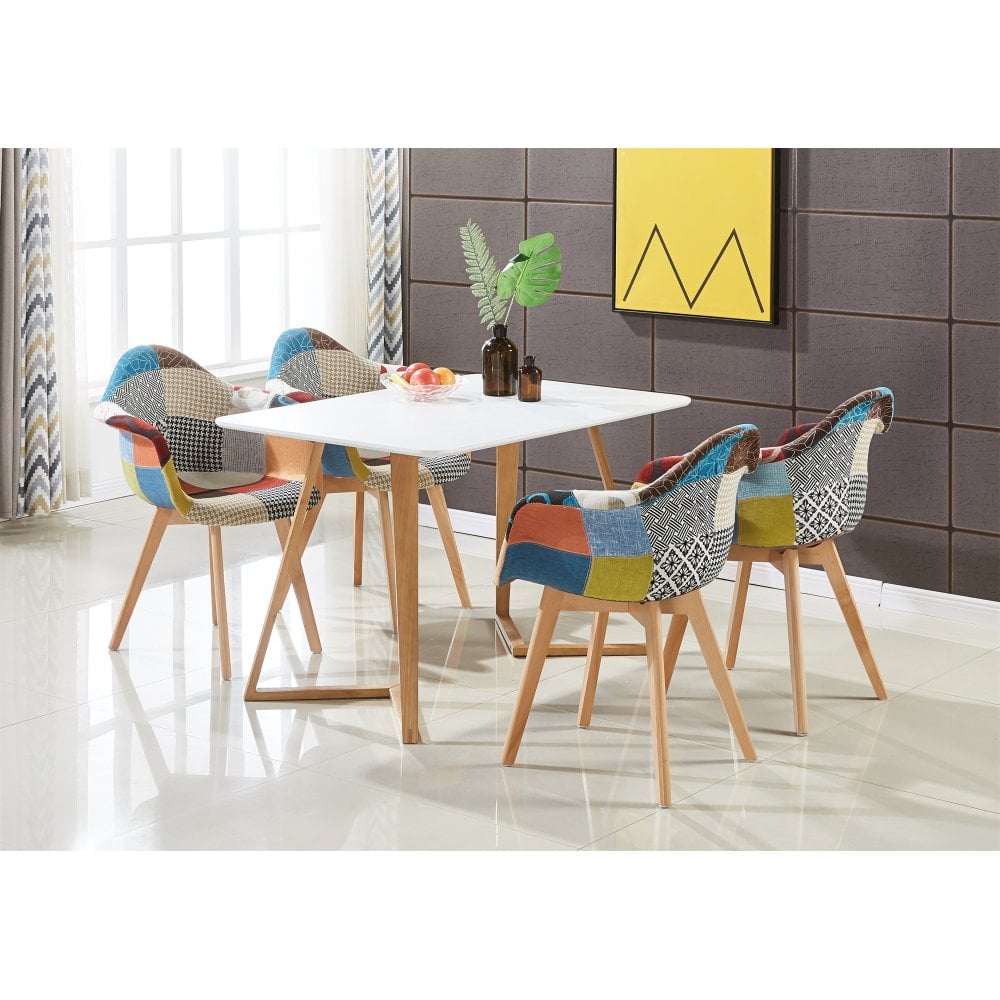
Armchairs at a dining table add a subtle sense of comfort and formality, which is why many people choose one or two armed chairs for the head positions and armless chairs along the sides. Arms also make it easier to get in and out of a seat, which is genuinely useful for older family members or anyone who spends a long time seated during dinner.
The trade-off is space. Armed chairs are wider, so they need a little extra room to tuck under the table and slide out comfortably.
A popular middle-ground approach is mixing armed chairs at the head and foot of the table with armless chairs along the sides. This keeps the overall footprint manageable while still giving the two "anchor" seats a slightly more elevated, comfortable feel, often ideal for whoever hosts or carves at the table most often.
When measuring for armed chairs, check the width from arm to arm rather than just the seat width, and compare that against the table's edge-to-edge clearance. A gap of at least 5–8cm on either side of the chair generally allows for comfortable sliding in and out without catching on the table edge.
Modern Fabric Dining Chairs
Modern fabric dining chairs typically favour clean lines, tapered wooden or metal legs, and neutral or muted colour palettes. Boucle and ribbed textures have become especially popular in contemporary interiors because they add tactile interest without overwhelming a room visually.
This style suits open-plan kitchen-diners and newer builds particularly well, where the dining area often flows directly into a living or kitchen space and needs to feel cohesive with the rest of the room.
Colour trends within modern fabric seating have shifted noticeably in recent years, moving away from stark grey toward warmer neutrals like putty, sage, and terracotta-adjacent tones. These warmer shades pair well with the natural wood and matte black finishes commonly seen in current kitchen design, helping the dining area feel connected to the rest of an open-plan space rather than visually separate from it.

Luxury Fabric Dining Chairs
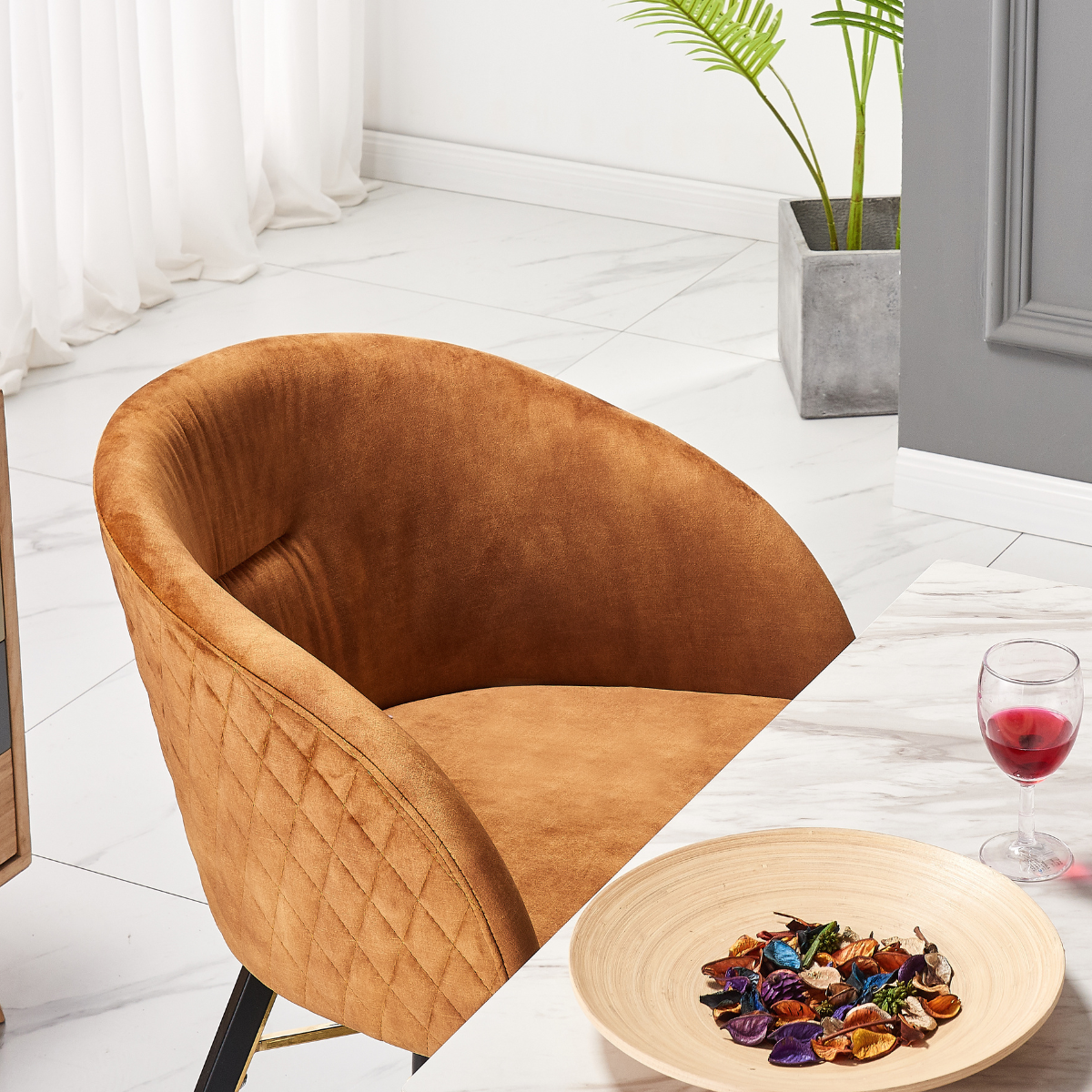
Luxury fabric dining chairs usually stand out through fabric quality, tailored stitching, and design details like button-back tufting, curved silhouettes, or velvet finishes. These chairs often use higher-density foam and a sturdier frame, which contributes to both the premium feel and long-term durability.
Choosing one or two statement luxury chairs, even within a mostly simple dining set, is a popular way to elevate a room without redesigning the whole space.
Velvet remains one of the most requested luxury fabrics for dining chairs, largely because of how it catches light differently depending on the viewing angle, adding subtle depth to an otherwise simple room. The trade-off is that velvet generally needs slightly more careful cleaning than flatter woven fabrics, so it suits households who don't mind a bit of extra care in exchange for the look.
Handmade Fabric Dining Chairs
Handmade fabric dining chairs are typically made in smaller batches, often with closer attention to joinery, fabric cutting, and finishing details than mass-produced alternatives. This can mean better consistency in stitching and a frame built to last considerably longer.
They tend to cost more, but for buyers who value craftsmanship or want a design that feels distinct from mass-market furniture, the investment often pays off in both longevity and appearance.
Handmade construction often shows up in small, easy-to-miss details: hand-finished piping along the seams, precisely mitred fabric corners, and joinery that's screwed and glued rather than relying on glue alone. These details rarely feature in product photos, so it's worth checking the product description or asking a retailer directly if craftsmanship is a priority for you.
Explore PN Home's collection of stylish fabric dining chairs to find comfortable seating that complements your dining table and interior.

Fabric Dining Room Chairs for Different Interior Styles
Fabric chairs are versatile enough to work across nearly every interior style, but small style tweaks help them blend even better with your existing decor.
Modern and Contemporary Dining Rooms
Contemporary spaces generally favour simple silhouettes, neutral or bold solid colours, and slim metal or light wood legs. Textured fabrics like boucle or ribbed weave add depth without competing with other design elements in an open-plan space.
Pairing these chairs with a pendant light directly above the table, rather than a central ceiling light for the whole room, is a small styling touch that reinforces the contemporary feel and draws the eye to the seating area.
Classic and Traditional Interiors
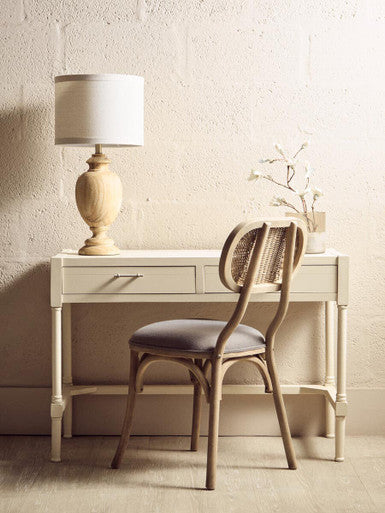
Traditional dining rooms tend to suit chairs with curved backs, turned wooden legs, and richer fabric tones such as deep green, burgundy, or navy. Details like piping along the seams or subtle button detailing also complement more classic architecture and furniture.
These fabric tones also tend to hide everyday marks well, which is a practical bonus in a room that's used often for family meals as well as more formal occasions.
Minimalist Dining Spaces
Minimalist interiors work best with chairs that avoid excess detailing altogether. A single neutral fabric colour, straight legs, and a compact silhouette keep the look calm and uncluttered, letting the table and lighting take centre stage instead.
If you're drawn to minimalism but still want a hint of texture, a subtle woven pattern in a tone-on-tone colourway offers visual interest up close while still reading as a solid, calm colour from across the room.
How to Choose Comfortable Upholstered Dining Chairs
Comfort is subjective, but a few measurable factors consistently make a difference:
- Foam density – higher-density foam resists sagging over time.
- Seat height – should allow feet to sit flat on the floor with knees roughly level with hips.
- Backrest support – a slight curve or recline supports the lower back during longer meals.
- Breathable fabric – natural or blended weaves feel cooler than very tightly woven synthetic fabrics in warm rooms.
Sitting in a chair for a few minutes in-store, or checking detailed product measurements when buying online, is the most reliable way to judge comfort before committing.
Best Fabric Dining Chairs for UK Homes
British interiors often work with more compact rooms than newer builds abroad, so proportion matters. Chairs with a seat width of around 45–50cm and a slim leg profile tend to suit the average UK dining space without feeling bulky.
Neutral or muted fabric tones remain a safe, popular choice across the UK because they suit a wide range of wall colours, flooring types, and existing furniture, from Victorian terraces to modern apartments.
British weather is also worth a mention. Homes without air conditioning can feel warm during the summer months, so breathable fabrics like cotton-linen blends tend to be more comfortable year-round than heavier synthetic weaves, which can feel warmer against the skin during a long summer meal.

How to Match Fabric Dining Chairs With Your Dining Table
Matching chairs to a table isn't just about colour. Proportion, wood tone, and overall style all play a part in making a dining set feel considered rather than randomly assembled.
| Table Style | Chair Style That Works Well |
|---|---|
| Oak farmhouse table | Neutral fabric chairs with turned or tapered wooden legs |
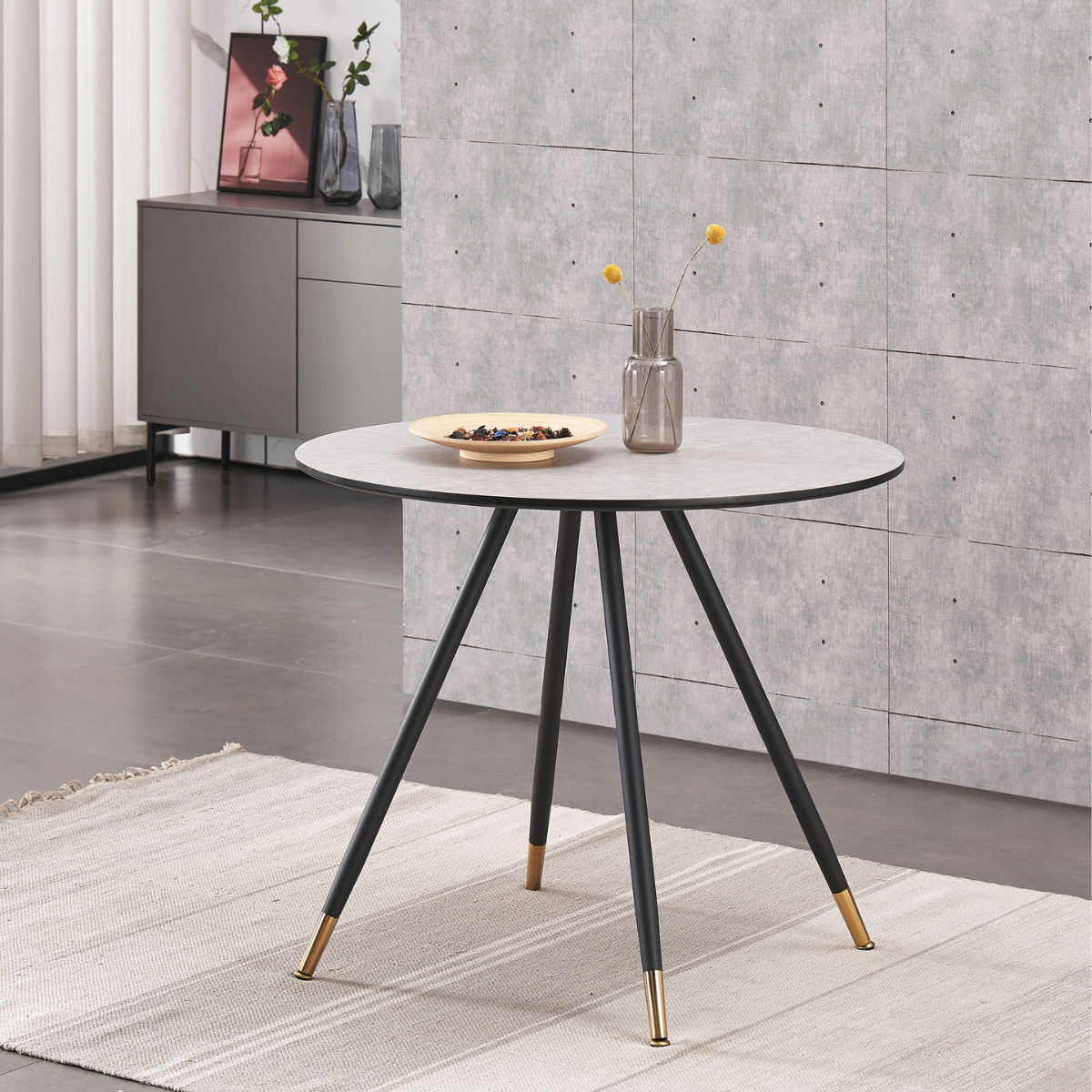
| Glass or marble-top table | Fabric chairs with slim metal legs for a contemporary contrast |
| Dark walnut table | Muted jewel-tone or deep neutral fabric chairs |
| White or light wood table | Soft pastel or oatmeal fabric chairs for a light, airy look |
A simple rule that works in most rooms: if your table has a strong wood tone, let the chair fabric introduce colour or texture instead of competing with another wood tone.
Leg finish is another detail that ties a set together. Matching the chair legs to the table legs, whether that's natural oak, black metal, or brass, creates a much more cohesive look than mismatched finishes competing for attention. Even when the fabric colours are chosen freely, consistent leg finishes make the whole room read as intentional rather than randomly assembled.
If you're mixing chair styles rather than buying a fully matching set, try to keep at least one element consistent across all the chairs, whether that's the leg colour, the fabric tone, or the overall silhouette. This single point of consistency is usually enough to make an eclectic mix look curated rather than mismatched.
What Fabric Is Best for Dining Chairs?
There isn't one single "best" fabric, because the right choice depends on your household and how the chairs will be used. That said, some fabrics consistently perform better for dining specifically.
Fabric durability for upholstery is commonly measured using the Martindale rub test, an internationally recognised method that rubs a fabric sample in a controlled way to see how many cycles it withstands before showing wear. According to <cite index="3-1">testing guidance from Xometry, fabrics rated up to 10,000 rubs are best suited to decorative purposes, 10,000 to 20,000 rubs suit light domestic furnishings such as dining chairs used occasionally, 20,000 to 30,000 rubs suit general everyday domestic use like living room chairs and sofas, and fabrics rated above 30,000 rubs are built for commercial settings such as restaurants and hotels</cite>.
For a dining chair used daily by a family, aiming for a fabric rated at least 20,000 rubs is a sensible benchmark.
| Martindale Rub Count | Suitable For |
|---|---|
| Up to 10,000 | Decorative use only, such as accent cushions |
| 10,000–20,000 | Light domestic use, occasional dining chairs |
| 20,000–30,000 | General everyday domestic use, family dining chairs |
| 30,000+ | Heavy-duty use, suitable even for commercial settings |
Rub count isn't the only thing worth checking, though. Fibre content matters too. Natural fibres like cotton and linen feel breathable and soft but can be more prone to creasing and staining than synthetic or blended alternatives. Polyester and polyester blends, on the other hand, tend to resist wrinkling and fading better, particularly in rooms that get direct sunlight.
Weave tightness also affects both feel and durability. A tightly woven fabric generally resists snagging and pilling better than a loosely woven one, which is worth checking if you have pets, since claws can catch more easily on looser weaves.
Easy-Care and Stain-Resistant Dining Chair Fabrics
Performance fabrics treated with a stain-resistant finish are ideal for households with children or anyone who enjoys a glass of red wine at dinner. These fabrics typically repel liquid on the surface long enough to blot it away before it soaks in.
Woven synthetic blends and treated cottons tend to perform best here, offering a good middle ground between softness and practicality.
Durable Fabrics for Everyday Family Dining
For chairs that get used multiple times a day, tightly woven fabrics with a higher rub count hold up noticeably better over time. Chenille, woven textured plains, and performance velvet are popular choices because they combine a soft feel with solid wear resistance.
Soft and Comfortable Upholstery Options
If daily wear isn't the main concern and comfort is the priority, softer fabrics like velvet or boucle bring a cosier, more tactile feel. These work particularly well in dining rooms used mainly for special occasions rather than constant daily meals.
| Fabric Type | Feel | Best Suited For |
|---|---|---|
| Cotton-linen blend | Soft, breathable, natural | Everyday use, warmer rooms |
| Chenille | Soft with a slight texture | Family dining, good durability |
| Boucle | Textured, tactile, cosy | Modern interiors, moderate use |
| Velvet | Plush, luxurious | Occasional dining, statement chairs |
| Performance weave | Smooth, treated for stains | Families, high-traffic dining areas |
There's no need to choose a single fabric type for every chair in the room, either. Some households deliberately pair two coordinating fabrics, such as a plain fabric on the main set with a contrasting textured fabric on the head chairs, to add visual interest without a full mismatched look.

How Many Fabric Dining Chairs Do You Need?
This depends entirely on your table size, but there are some general guidelines that make shopping much simpler.
A useful rule of thumb is to allow roughly 55–60cm of table edge per person, which gives enough elbow room for eating comfortably without chairs bumping into each other when everyone is seated. Measuring your table length and dividing by this figure gives a quick, realistic estimate of how many chairs will actually fit.
| Table Length | Typical Seating Capacity |
|---|---|
| Under 100cm | 2 chairs |
| 100–140cm | 4 chairs |
| 150–180cm | 6 chairs |
| 200cm+ | 8 chairs |
It's also worth thinking about buffer chairs. Many households buy one or two extra chairs beyond their table's usual capacity, storing them elsewhere and bringing them out for guests. This is a practical way to host larger gatherings occasionally without committing to a permanently larger set that crowds the room day to day.
Dining Chairs for a 2-Seater Table
A 2-seater table typically needs just two chairs, ideal for compact kitchens, studio flats, or a cosy breakfast corner. Choosing chairs with a slim profile helps keep a small space feeling open.
Dining Chairs for a 4-Seater Table
Most 4-seater tables measure around 120cm long, comfortably fitting four chairs, one on each side. This is the most common dining setup in UK homes and works well for both everyday meals and casual entertaining.
Dining Chairs for a 6-Seater Table
A 6-seater table, generally around 150–180cm long, usually fits six chairs, or four along the sides with one at each end. Many households choose an extendable table paired with six chairs to allow for extra guests when needed.
Dining Chairs for an 8-Seater Table
For larger households or those who entertain often, an 8-seater table, typically 200cm or longer, comfortably seats eight fabric dining chairs. This size works well in bigger open-plan spaces or dedicated dining rooms.
Need the right number of chairs for your dining space? Browse PN Home's fabric dining chair sets and choose the size that works best for your table.
How to Care for and Clean Fabric Dining Chairs
Keeping fabric dining chairs looking good doesn't need to be complicated. A few simple habits go a long way:
- Vacuum regularly using an upholstery attachment to remove dust and crumbs before they embed in the weave.
- Blot spills immediately rather than rubbing, which can push liquid deeper into the fabric.
- Check the care label for the correct cleaning code (W for water-based cleaner, S for solvent-based, WS for either, X for vacuum only).
- Spot test any cleaning product on a hidden area first.
- Rotate seat cushions if removable, to even out wear over time.
A little regular maintenance keeps fabric chairs looking fresh for years rather than months.
For deeper cleans, a fabric-safe upholstery cleaner applied with a soft brush, followed by a clean, slightly damp cloth to lift the product away, works well for most stains. Always work from the outside of a stain inward to avoid spreading it further across the fabric.
Removable seat covers, where available, are worth considering for households with young children or pets, since they can be taken off and machine washed rather than relying entirely on spot cleaning. If covers aren't removable, a fabric protector spray applied when the chairs are new can make future spills noticeably easier to manage.
Are Fabric Dining Chairs Durable?
Yes, when the fabric and frame are chosen well. Durability comes down to two main factors: the fabric's rub count, as discussed earlier, and the quality of the frame construction underneath.
A solid wood or reinforced metal frame with dowelled or screwed joints (rather than just glued) will typically outlast a poorly constructed frame regardless of how tough the fabric is. Checking both elements before buying gives a much clearer picture of how long a chair will genuinely last.
Weight capacity is another practical indicator of durability, even if it isn't something most buyers think to check. A chair rated for a higher weight capacity generally uses thicker frame materials and stronger joints, which tends to correlate with better long-term durability even for lighter household members.
It's also worth checking how the fabric is attached to the frame. Fabric that's stapled and finished with a neat trim tends to hold up better over years of use than fabric simply glued in place, which can start to lift or fray at the edges sooner.
Are Upholstered Dining Chairs Comfortable for Long Meals?
Generally, yes. The padding in upholstered chairs distributes weight more evenly than a hard wooden seat, which reduces pressure points during longer meals. A well-designed backrest also supports natural posture better than a flat, unpadded surface.
For dinner parties, family gatherings, or evenings that stretch on with conversation, this comfort difference becomes especially noticeable compared to hard chairs.
Anyone who has hosted a long holiday dinner knows the moment guests start shifting in their seats or standing up to stretch. Well-padded fabric chairs with proper back support tend to delay that moment considerably, letting the evening continue comfortably rather than being cut short by uncomfortable seating.
Why Choose Fabric Dining Chairs From PN Home?
Stylish Designs for Modern UK Homes
PN Home's range covers a wide variety of styles, from clean contemporary silhouettes to more classic, curved designs, making it easier to find chairs that suit your existing interior rather than working around a limited selection.
Comfortable Seating for Everyday Dining
Each design is built with everyday use in mind, balancing supportive padding with a shape that stays comfortable through longer meals and regular family use.
Quality Materials and Upholstery
Fabric and frame quality are considered together, aiming for chairs that hold their shape and finish well beyond the first year of use rather than showing wear prematurely.
Dining Chairs to Suit Different Interior Styles
Whether your home leans modern, traditional, or somewhere in between, the range is designed to offer options that complement a variety of tables, colour schemes, and room layouts.
Give your dining room a stylish update with PN Home's collection of fabric and upholstered dining chairs, designed to combine comfort, quality and contemporary style.
Common Mistakes to Avoid When Buying Fabric Dining Chairs
Even with all the right information, it's easy to make a small mistake that becomes an ongoing annoyance once the chairs are in daily use. A few of the most common ones are worth flagging before you buy.
- Skipping the measurements. Photos can be deceiving. Always check seat height, seat width, and overall chair height against your table and room before ordering.
- Choosing fabric on colour alone. A beautiful colour on a fabric that pills or fades quickly won't stay beautiful for long. Balance colour with rub count and fibre content.
- Forgetting about chair spacing. Chairs need room to be pulled out and pushed back in without hitting a wall, sideboard, or radiator behind them.
- Ignoring the frame material. A stylish fabric on a weak frame is a short-term win. Always check what the legs and base are made from.
- Buying an odd number without a plan. Five or seven chairs can look unbalanced around a rectangular table unless deliberately styled with a bench or an extra seat at one end.
Taking a few extra minutes to check these details before purchasing saves a lot of frustration once the chairs actually arrive.
A Quick Checklist Before You Buy
Before finalising your choice, it helps to run through a short checklist covering the essentials:
- Confirm the table size and how many chairs it comfortably seats.
- Decide whether you need arms on any of the chairs.
- Choose a fabric type based on how often the chairs will be used.
- Check the Martindale rub count if durability is a priority.
- Match the leg finish to your table or existing furniture.
- Measure the room to ensure enough space for chairs to be pulled out fully.
- Read the care label so you know how to clean the fabric from day one.
Working through this list takes only a few minutes but makes a noticeable difference in how satisfied you'll be with the chairs months, or even years, down the line.
Fabric Dining Chairs FAQs
Are Fabric Dining Chairs Easy to Clean?
Most fabric dining chairs are easy to maintain with regular vacuuming and prompt spill blotting. Performance or treated fabrics make cleaning even simpler for busy households.
Are Fabric Dining Chairs Suitable for Families?
Yes, especially fabrics with a higher rub count and a stain-resistant treatment. These options handle daily use and occasional spills far better than delicate decorative fabrics.
What Is the Best Fabric for Dining Chairs?
Tightly woven, treated fabrics rated at least 20,000 Martindale rubs generally offer the best balance of comfort and everyday durability for dining use.
Should I Choose Fabric Dining Chairs With or Without Arms?
Choose armed chairs for extra comfort and easier seating, especially at the head of the table, and armless chairs when space is limited or a slimmer look is preferred.
How Many Fabric Dining Chairs Do I Need?
This depends on your table size, typically two for a compact table, four for a standard table, and six to eight for larger or extendable tables.
Are Upholstered Dining Chairs Comfortable?
Yes, the padding and shaped backrest generally offer noticeably more comfort than hard wooden or plastic dining chairs, especially during longer meals.
Shop Fabric Dining Chairs at PN Home
Discover stylish fabric dining chairs, upholstered dining chairs, and modern dining room seating at PN Home. Explore different designs, colours, materials, and set sizes to find the perfect chairs for your dining space.
Shop Fabric Dining Chairs at PN Home →
Final Thoughts
Choosing fabric dining chairs comes down to balancing comfort, durability, and style for the way your household actually uses its dining space. Thinking through fabric type, set size, and frame quality before you buy makes it far easier to land on chairs you'll genuinely enjoy using for years.
There's no need to get every decision perfect on the first try, either. Fabric, colour, and even arm style can often be adjusted or added to over time as your dining space and household evolve, so it's fine to start with what suits you now and build from there.
Upgrade your dining space with comfortable, stylish, and beautifully upholstered seating from PN Home. Whether you need a set of 2, 4, or 6 chairs, explore the collection to find fabric dining chairs that suit your table, interior, and everyday lifestyle.

Leave a comment
This site is protected by hCaptcha and the hCaptcha Privacy Policy and Terms of Service apply.