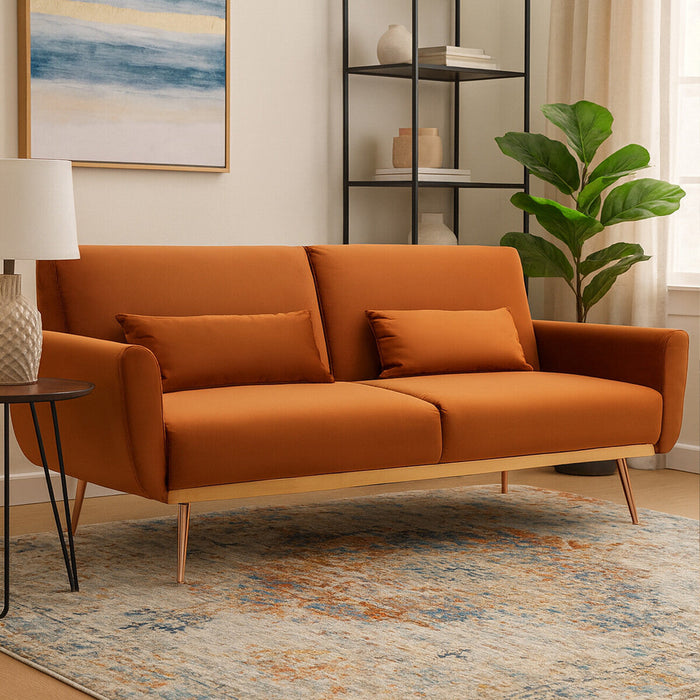
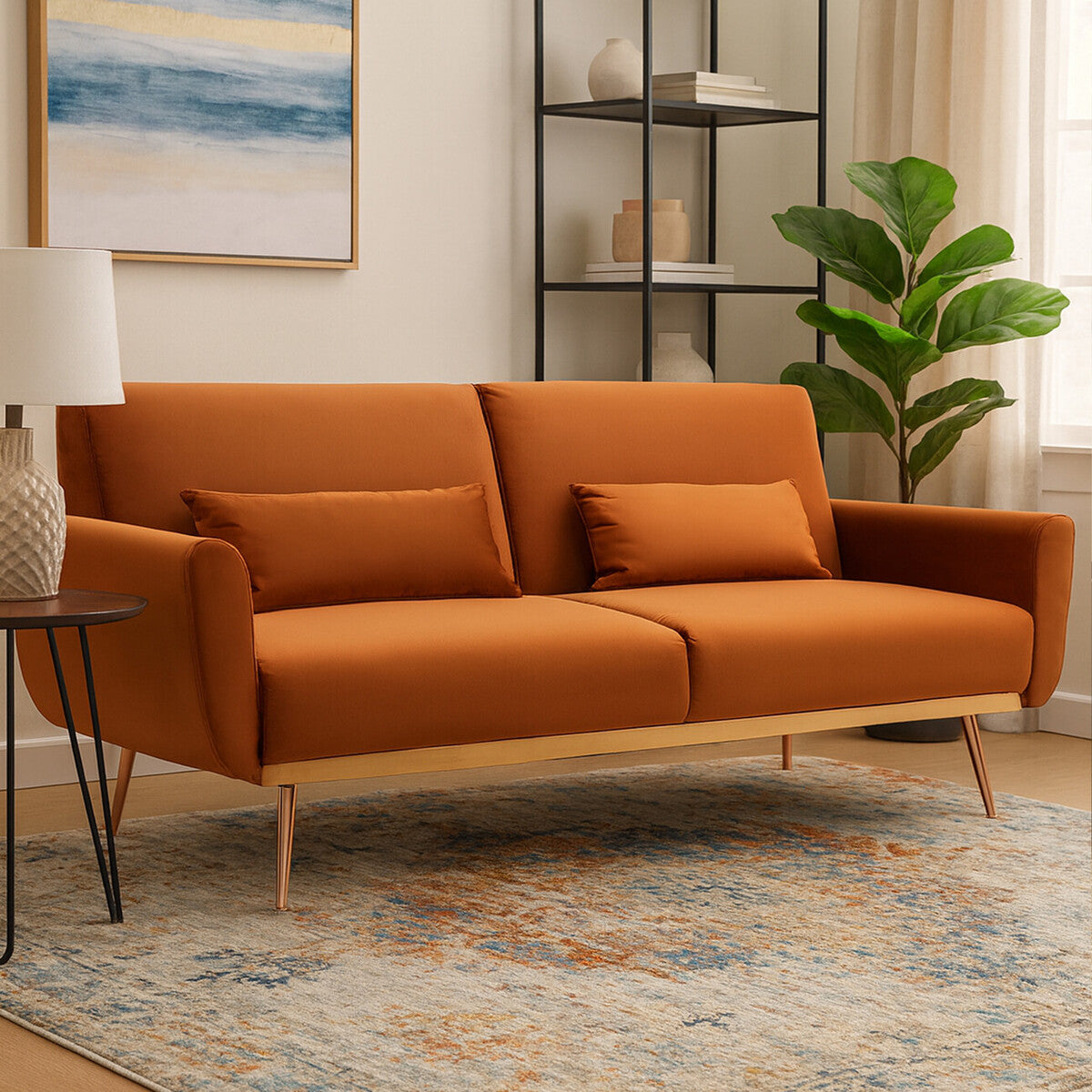
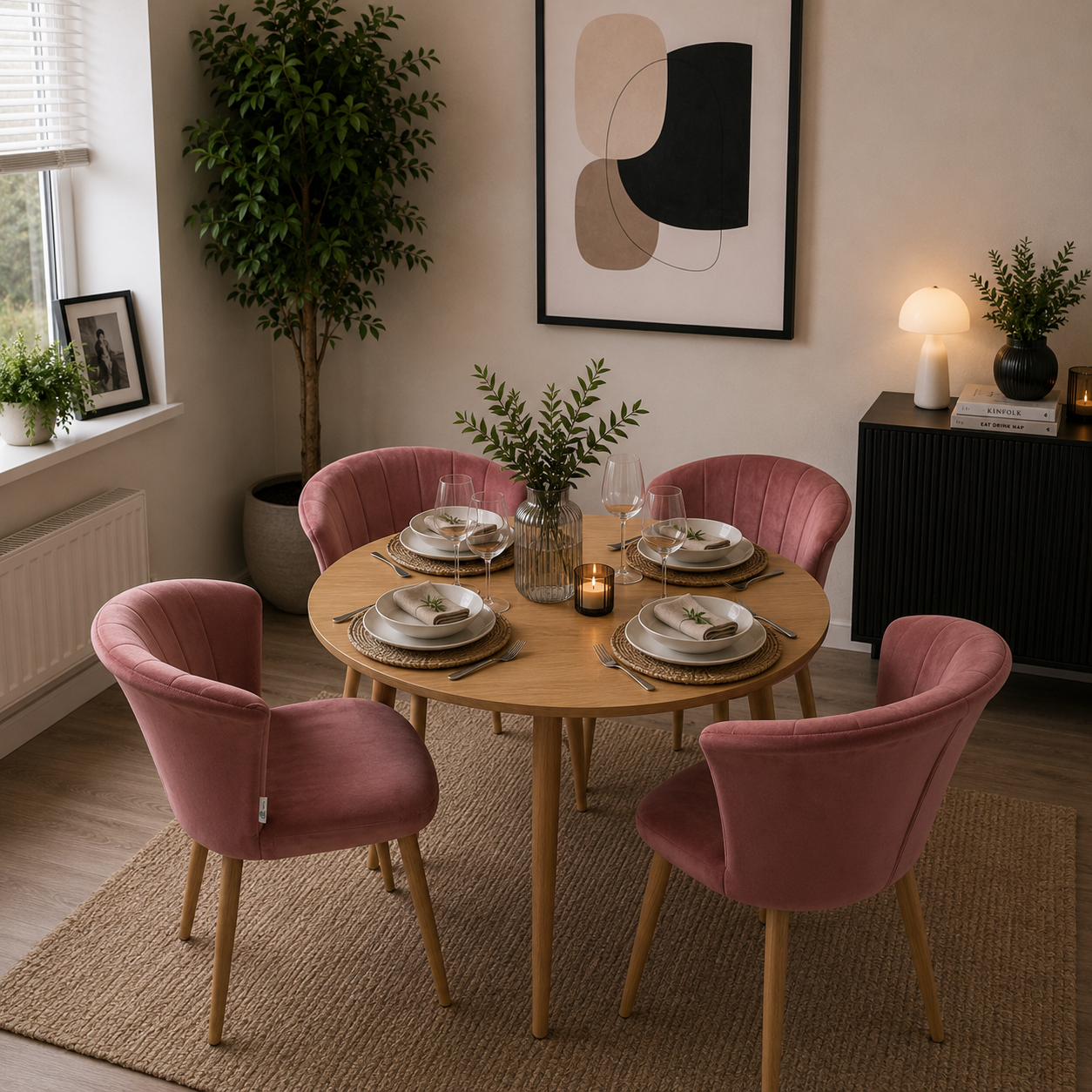




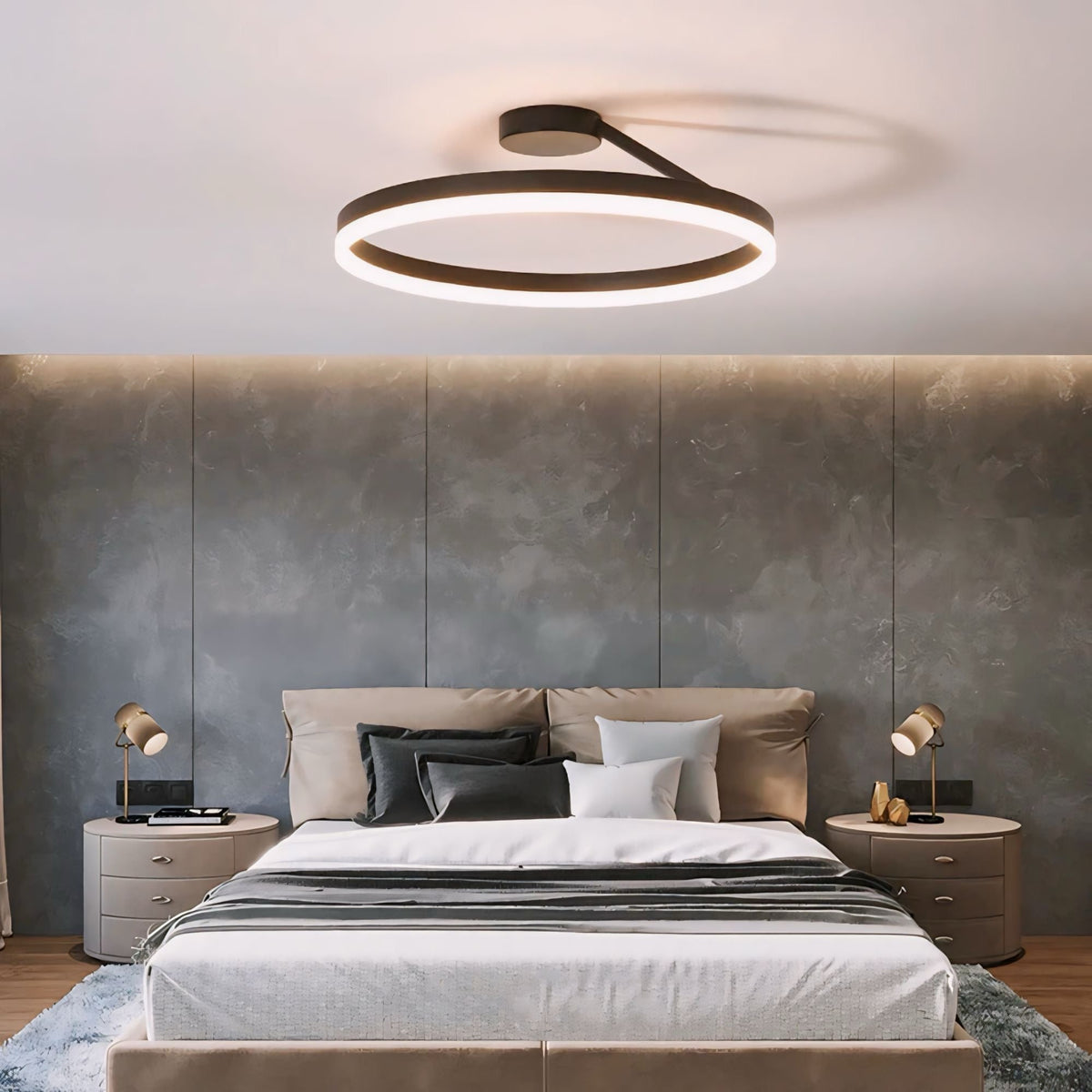
The clocks go back at 2am on Sunday 25 October 2026, and from then until February most of us will spend our evenings at home under artificial light. That is the moment a room lit by a single ceiling light starts to feel flat and harsh. The fix is not more light but more sources of light, at different heights, each with a job to do. Designers call it layering, and it is one of the cheapest ways to change how a room feels.

The three layers of light
1. Ambient light: the base
This is the general light that lets you move around safely: a ceiling pendant, a flush light or several lamps together. On its own it tends to flatten a room, so think of it as the starting point, not the finished scheme. Put it on a dimmer if you can, so it can be bright for tidying and low in the evening.
2. Task light: where you read, work and cook
Focused light exactly where you need it: a reading lamp by the sofa, a desk lamp, a pendant over the dining table. Task light should be brighter than the ambient layer and positioned so your body or head doesn't cast a shadow over what you are doing. Our Newton desk lamps are a good example: a solid base and a shade that directs light down onto the surface.
3. Accent light: the atmosphere
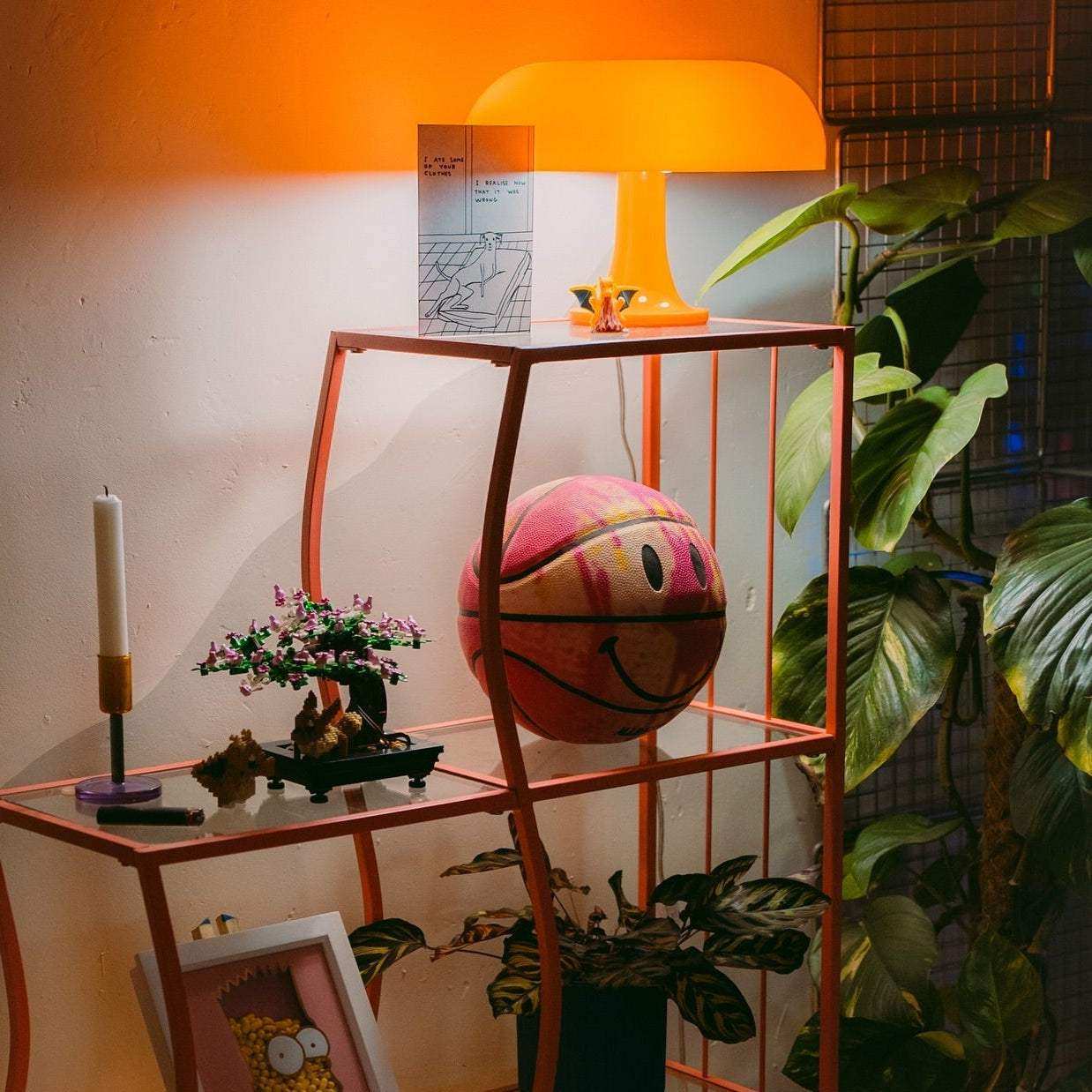
Low, soft light that picks out a corner, a shelf, a plant or a picture: table lamps, a floor lamp in a dark corner, candles, LED strips inside a cabinet. This is the layer that makes a room feel inviting in the evening, and it is the one most homes are missing.
How much light do you need?
Light output is measured in lumens. As a rough guide, a living room needs about 100–150 lumens per square metre for general lighting, and a reading spot needs far more, around 500 lumens per square metre, concentrated where you are reading. Bedrooms need less: about 50–100.
A worked example: a 4 × 5m living room is 20m², so it needs roughly 2,000–3,000 lumens of ambient light in total. A standard LED bulb equivalent to an old 60W bulb gives about 800 lumens, so three or four of those, spread across a ceiling light and lamps, will light the room. Then add a reading lamp and a couple of low accent lights on top.
Choose the right colour of white
Bulbs are labelled with a colour temperature in kelvin (K). The lower the number, the warmer and more yellow the light.
| Colour temperature | Looks like | Best for |
|---|---|---|
| 2700K | Warm white, like a traditional bulb | Living rooms, dining rooms, bedrooms |
| 3000K | Soft white, a little crisper | Kitchens, bathrooms, hallways |
| 4000K | Cool white | Home offices, desks, utility rooms |
The golden rule: keep the bulbs in one room the same colour temperature. A mix of warm and cool light in the same space looks odd, even if you can't immediately say why.
Where to put your lamps
- Make a triangle. Place at least three light sources around the room in a rough triangle (for example, a floor lamp by the sofa, a table lamp on a sideboard and a lamp in the opposite corner). The light spreads evenly and there are no gloomy corners.
- Light the corners. Dark corners make a room look smaller. A floor lamp in a corner makes the walls look further away.
- Reading lamps beside, not behind. Put a reading lamp beside the arm of the sofa or chair, with the bottom of the shade roughly at eye level when you are sitting down, so you see the page, not the bulb.
- Mix heights. Combine lights at ceiling height, eye height and low level. That variation is what makes layered light look natural.

Room by room
Living room
Ceiling light on a dimmer, a floor lamp beside the sofa for reading, and one or two low lamps for the evening. If you have no side tables near a socket, a floor lamp is the easiest win. The Brunswick arched floor lamp (147cm reach) lights a sofa or coffee table from above without a ceiling point, and the Zeus five-arm floor lamp spreads light across a large corner.
Dining room
Hang a pendant over the middle of the table, roughly 75–85cm above the tabletop: low enough to pool light on the table, high enough not to block anyone's view. Add candles or a low lamp on a sideboard for dinner. Pendants such as the Whisk smoked-glass shade (£29) are an easy swap for a bare bulb.
Bedroom
Warm (2700K) light only, with a lamp on each side of the bed so neither person needs the overhead light to read. Dim the ambient layer, or switch it off, in the hour before sleep.
Hallway
The first thing you see when you come in on a dark evening. A lamp on a console table or a pair of wall lights feels far more welcoming than a single bright ceiling light.
Floor lamps by budget
| Lamp | Style | Height | Price |
|---|---|---|---|
| Bryant | Slim, white | 150cm | £44.95 |
| Stockholm | Tripod, two spotlights | 150cm | £47.95 |
| Bailey | Tripod with drum shade | 144cm | £97.95 |
| Brunswick | Arched | 170cm | £134.95 |
| Zeus | Five arms | 210cm | £189.95 |
| Abira | Five globes, marble base | 190cm | £299.95 |
For something sculptural, our PN Lux lighting includes statement ceiling and pendant lights designed to be the focal point of a room.
Five quick wins for this weekend
- Swap any cool-white bulbs in the living room and bedroom for 2700K warm white.
- Fit a plug-in dimmer, or smart bulbs, to your main lamps.
- Add a lamp to the darkest corner of your living room.
- Put a lamp by the front door on a timer, so you never come home to a dark house.
- Turn off the ceiling light after dinner for a week and see whether you miss it.
Frequently asked questions
What is layered lighting?
Combining three types of light in one room: ambient (general light), task (focused light for reading or cooking) and accent (soft light for atmosphere), at different heights.
What colour bulb is best for a living room?
Warm white, around 2700K. It is closest to traditional bulbs and makes a room feel relaxed in the evening.
How many lamps should a living room have?
At least three light sources besides the ceiling light, placed in a rough triangle, is a good starting point for an average living room.
How high should a light hang over a dining table?
About 75–85cm above the tabletop, centred over the table.